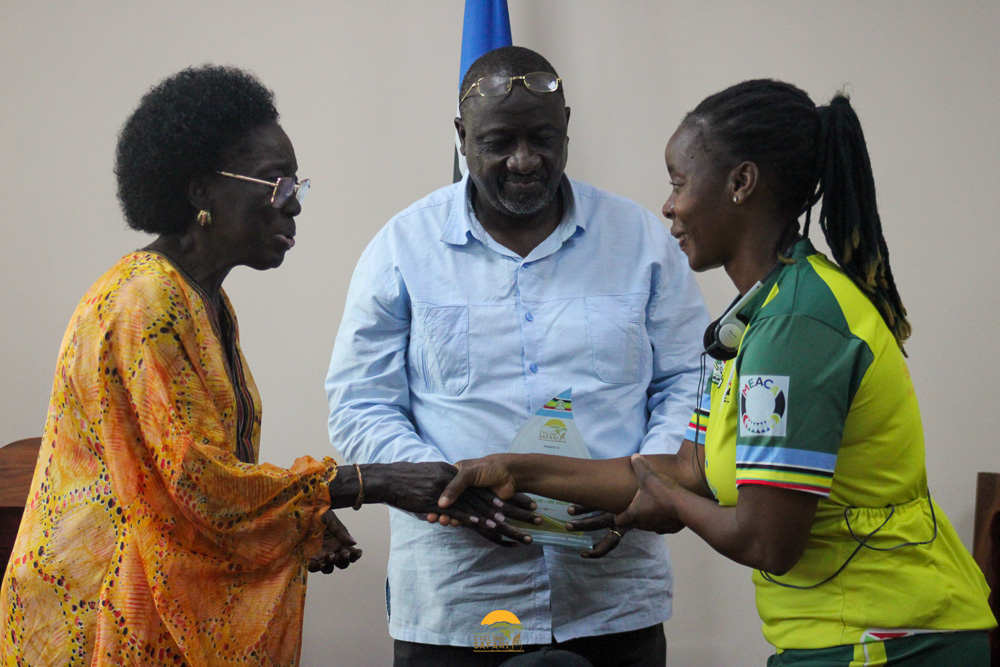
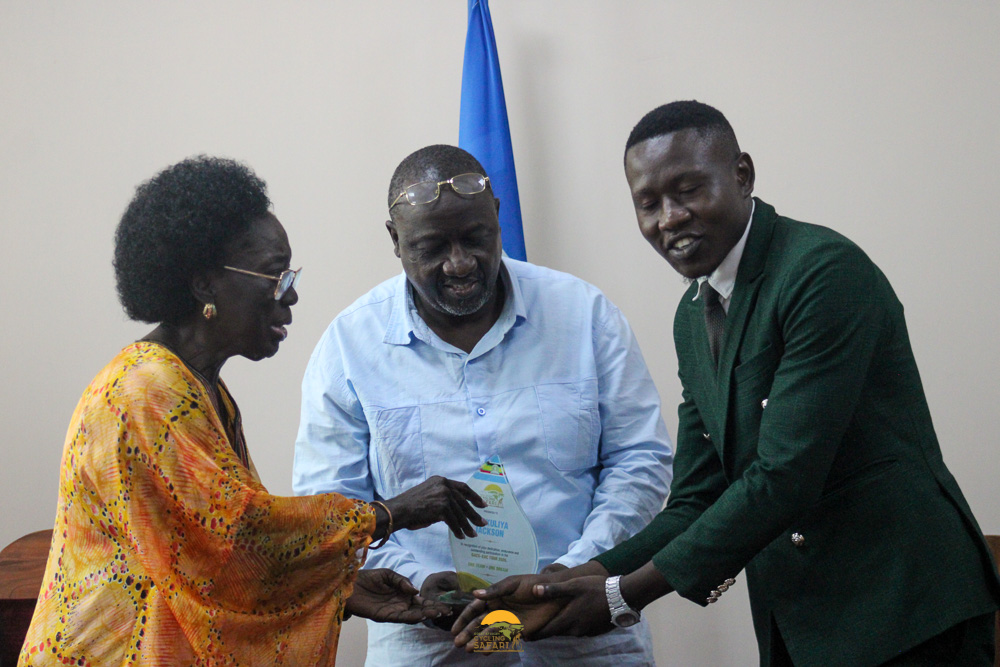
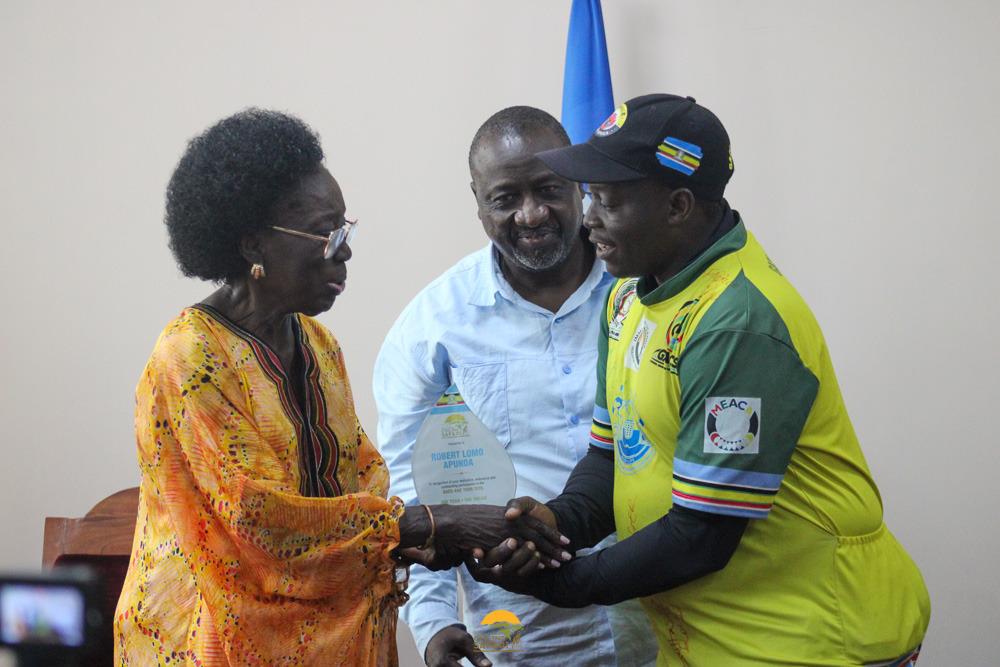
Minister for East African Community Affairs Rt. Hon. Rebecca Alitwala Kadaga has welcomed home a team of 35 cyclists who completed a 55-day Great Africa Cycling Safari (GACS) expedition across the East African Community (EAC), promoting regional integration, climate action, peace and unity.
Kadaga received the cyclists following their return from the non-competitive expedition, which covered more than 6,000 kilometres across the region.
The tour, flagged off by Kadaga in Kampala on August 12, concluded on Thursday, October 8.
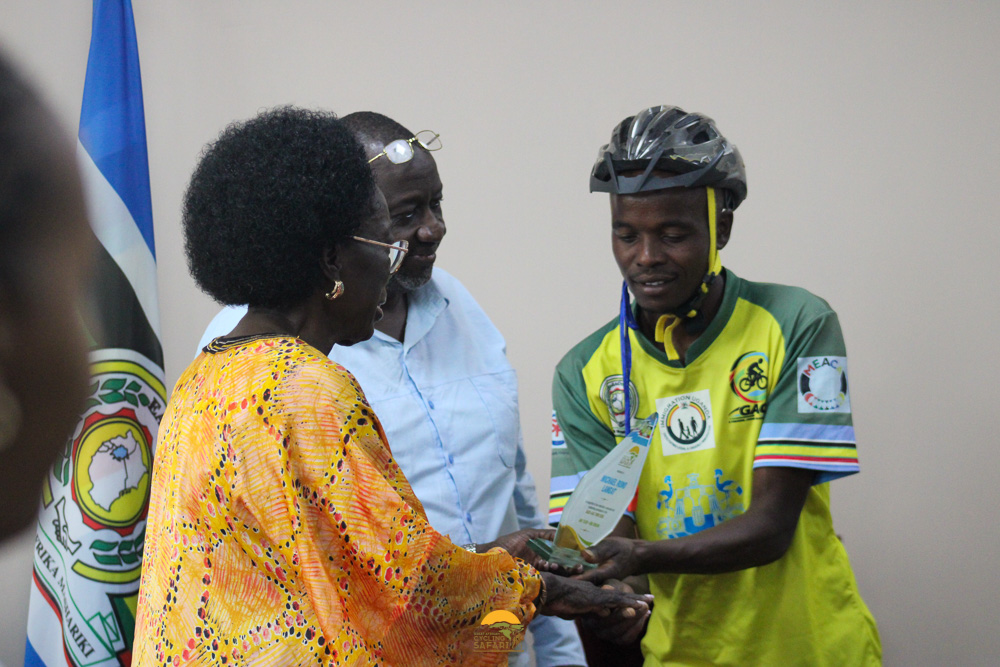
The expedition was captained by Kenyan Michael Langat, with Ugandan John Baptist Ssemujju serving as the leader of delegation.
Kadaga commended the cyclists for using sport and adventure to advance the EAC’s integration agenda, describing them as ambassadors of regional cooperation.
“I am glad to receive this group back after a 55-day expedition. These cyclists are more than just participants in a cycling tour; they are ambassadors of regional integration.
“Their messages on integration, climate change and unity reflect the EAC’s vision of a people-centred regional integration process,” Kadaga said.
The Great Africa Cycling Safari is a privately organised initiative authorised by the EAC Secretariat in Arusha, Tanzania.
Each year, the Secretariat issues an introductory letter to partner states, facilitating the cyclists’ passage through the region and requesting governments to offer support where possible.
The expedition seeks to strengthen regional integration, promote climate action, enhance food security, foster peace and security, and develop bicycle tourism as a tool for regional development.
This year’s route traversed Uganda, Kenya, Tanzania, Burundi, Rwanda and the Democratic Republic of the Congo (DRC), with the cyclists reaching five regional capitals: Kampala, Nairobi, Dodoma, Bujumbura and Kigali.
The 35-member contingent comprised 17 Ugandans, 12 Kenyans, three Burundians, two Tanzanians, one Rwandan, one Zimbabwean and one South Sudanese.
This year’s expedition marked the ninth edition of the initiative since its launch in 2016, underscoring the organisers’ commitment to using cycling as a platform for cross-border engagement and people-to-people cooperation.
Beyond the physical challenge of covering thousands of kilometres, the cyclists also engaged communities along the route.
They established integration clubs in primary and secondary schools and conducted climate action campaigns to encourage young people to embrace regional unity and environmental responsibility.
Funding, border restrictions and language barriers remain challenges
Despite the expedition’s achievements, the organisers have identified several challenges that continue to constrain the initiative, including inadequate media coverage, limited funding, border restrictions, frequent currency exchanges and language barriers among participants.
John Baptist Ssemujju, the Ugandan leader of delegation, said limited financial resources remained a major obstacle to expanding the expedition’s reach and impact.
“Organising an expedition of this magnitude requires substantial resources, yet funding remains limited.
We also face inadequate media coverage, which makes it difficult to give the initiative the visibility it deserves and communicate its contribution to regional integration,” John Baptist Ssemujju said.
He added that border restrictions, particularly the closure of the Rwanda–Burundi border, had complicated movement and highlighted the need for stronger cooperation among EAC partner states.
“Although the EAC promotes the free movement of people and regional cooperation, practical challenges at some border points can disrupt our journey.
The closure of the Rwanda–Burundi border has been particularly challenging, while repeatedly exchanging currencies as we move from one country to another adds to the logistical burden,” he said.
John Baptist Ssemujju also pointed to language differences as a challenge to communication and interaction among cyclists from different partner states.
“Language remains another obstacle. Some participants from Kenya and Tanzania communicate comfortably in Kiswahili, but proficiency is more limited among participants from some other partner states.
This can affect communication within the group and our engagement with communities along the route,” he explained.
The organisers believe that stronger institutional support, improved publicity, increased sponsorship and closer coordination among EAC member states would help make future expeditions more effective.
As the Great Africa Cycling Safari concludes its ninth expedition, its organisers hope that the journey will continue to inspire citizens, particularly young people, to embrace regional integration not merely as a government policy but as a shared responsibility that can be advanced through everyday interactions, environmental action and cross-border cooperation.