By Joseph Mbazzi Muguluma
An Oracle’s reflections from Kifuuta, Katooke, Kyotera, Buddu, on the intoxicating nature of power, the danger of political idolatry and the enduring dignity of leaders who know when to step aside.
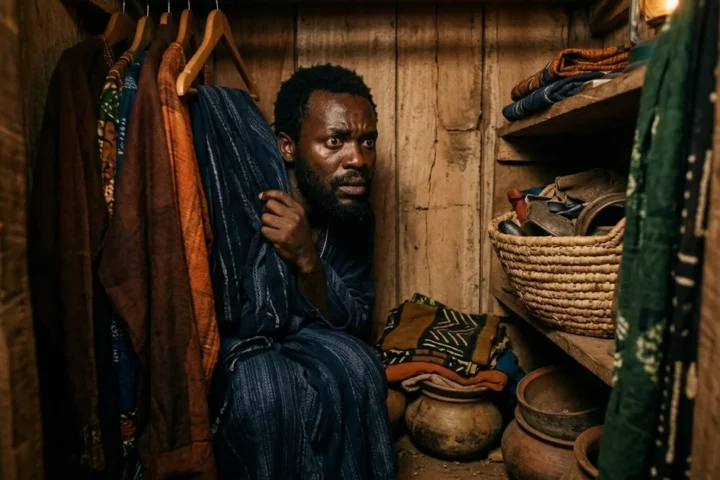
There is a dangerous disease that afflicts men who rise too quickly, acquire too much power and surround themselves with people who are afraid to tell them the truth. It is the conviction that they have become more than human.
Some acquire grand titles. Others build palaces, cultivate personality cults and demand loyalty that borders on worship. They begin to imagine that the nation belongs to them, that history cannot proceed without them and that their departure from office would bring the world to an end.
But history has a cruel way of correcting such delusions.
From the forests of Angola to the corridors of power in Zaire, from the presidential palaces of Libya to the dusty hideouts of Iraq, the lesson is remarkably consistent: power is temporary, authority is borrowed, and no human being is immortal.
Listen, my children. Independence was never merely about dancing in the streets and hoisting new flags. For those of us who came of age in the shadow of Africa’s liberation struggles, it was an intellectual and ideological battle. We read, debated, chose sides and imagined that the destiny of entire nations rested upon the arguments we made in college.
A copy of The Times was a prized possession. When one finally arrived, wrapped in brown paper and smelling of dust, we passed it around like hungry men sharing the last piece of meat. One paragraph could sustain a week’s argument. Political disagreements became personal, as though the conflict were unfolding in our own compounds in Kifuuta.
I was so consumed by the Angolan conflict that I nearly travelled into a war zone.
I despised Jonas Savimbi, the leader of UNITA, and wanted to join the forces fighting against him. In my youthful conviction, I would travel to Angola and stand alongside the government led by José Eduardo dos Santos.
I set off through Mutukula, Bukoba, Mbeya, Dodoma, Tunduma and Nakonde, crossing into Zambia before proceeding through Isoka and Mpika towards Kapiri Mposhi, where the roads diverged in different directions.
Then fear finally caught up with ideology.
The prospect of war became real. The guns, landmines, uncertainty and scarcity of basic necessities that I had previously encountered through political arguments were no longer distant abstractions. I turned back.
Years later, I travelled to Luena, in Angola’s Moxico Province, to confront the geography of that history. It was there that Savimbi was killed in 2002.
Standing on Angolan soil, I reflected on the strange mortality of men who had once appeared larger than life. Political titles, military ambitions and revolutionary declarations ultimately surrender to the same human fate.
That journey left me with a lesson more enduring than the ideological certainty of my youth: a leader may command armies, but he cannot command immortality.
Okufuuka Tembuzi: When a Leader Mistakes Himself for a God
In the language of my Buddu, there is a condition I call Okufuuka Tembuzi — the transformation of an ordinary man into a creature who imagines himself beyond the reach of other human beings.
A man leaves Katooke, secures a small office in Kampala and suddenly forgets the people who raised him. He acquires a title, a convoy and a circle of admirers. Before long, he expects everyone to bow, nobody to question him and everybody to celebrate his wisdom.
He has not merely acquired authority. He has developed a dangerous misunderstanding of his own humanity.
Political philosophers have various terms for the arrogance that accompanies social advancement and the intoxicating belief that one has finally arrived. Africa’s post-independence history offers some of the most striking illustrations of what happens when such arrogance becomes a governing philosophy.
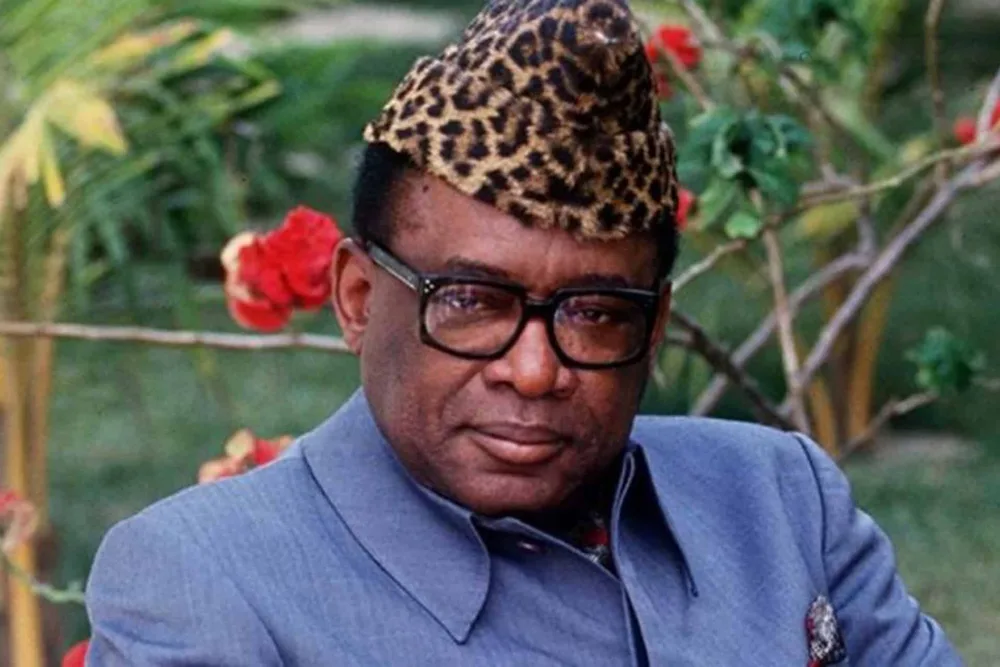
Kwame Nkrumah of Ghana carried the grand title of Osagyefo, commonly rendered as the Redeemer. Mobutu Sese Seko of Zaire cultivated an elaborate image of a warrior destined for conquest after conquest. Hastings Kamuzu Banda presided over Malawi with the authority of a leader whose personal supremacy was rarely open to challenge. Idi Amin proclaimed himself the Conqueror of the British Empire.
Their titles were different, but the danger was similar: the elevation of the individual above the institutions, citizens and principles that should constrain political power.
Mobutu’s Zaire eventually descended into economic and institutional decay, while the man who had projected an image of extraordinary power died in exile in Morocco in 1997. Amin, too, ended his days in exile in Saudi Arabia in 2003.
These were not merely the personal misfortunes of fallen rulers. They were reminders of what happens when political authority becomes inseparable from the personality of one individual.
Even Tembuzi, the imagined immortal creature of the forest, would be vulnerable if the people stopped fearing the forest and began cutting down its trees.
No leader is bigger than the society that gives him authority.
Lenin and the Dangerous Myth of the Indispensable Leader
Let us travel to Russia and the Bolshevik Revolution of 1917.
Vladimir Lenin became the central figure of a revolutionary movement that promised to overturn the existing political and economic order. His leadership helped establish the Soviet state, but his story also raises an enduring question: what happens when a movement begins to confuse its founding leader with the cause itself?
There is a lesson worth drawing from the revolutionary tradition, even without attributing invented quotations to Lenin.
A political leader is not a supernatural being. He is a human being entrusted with a responsibility, subject to error and ultimately dependent on other people to accomplish anything of lasting value.
The fact that someone led a liberation struggle does not automatically make that person the best administrator, the wisest policymaker or the only individual capable of governing.
A man who has commanded an army may struggle to manage an economy. A brilliant revolutionary may prove incapable of building inclusive institutions. A popular president may lose the public’s confidence.
Leadership is not a permanent certificate of superiority.
This is where many political movements lose their way. Instead of building institutions capable of surviving their founders, they construct systems in which the leader’s continued presence becomes the ultimate measure of stability.
The consequences are predictable: succession becomes a crisis, criticism becomes disloyalty, and citizens are encouraged to fear a future without the person in power.
But nations existed before their leaders and must continue after them.
The African Leaders Who Understood the Value of Leaving
Not every African liberation leader succumbed to the temptation of permanent rule. Some demonstrated that the measure of leadership is not simply how long a person occupies the highest office, but whether that person understands that the office belongs to the nation.
Julius Nyerere: The teacher who stepped aside
Tanzania’s founding president, Julius Nyerere, could have continued to exercise considerable political influence indefinitely. Instead, he relinquished the presidency in 1985 after leading the country for more than two decades.
He remained widely known as Mwalimu — Teacher.
His socialist experiment, Ujamaa, encountered serious economic difficulties, and his presidency was not without controversy. Yet his decision to leave office remains an important part of his political legacy.
Nyerere demonstrated that stepping aside need not mean abandoning one’s country. A former president can remain a respected citizen without insisting on controlling every decision made by his successor.
He returned to public life in a different capacity, eventually retiring to Butiama. He died in 1999.
The lesson is not that voluntary retirement automatically solves a country’s problems. It is that leadership should leave room for renewal.
Kenneth Kaunda: The dignity of accepting defeat
Zambia’s founding president, Kenneth Kaunda, led his country from independence in 1964 until 1991. His administration had been a one-party state for much of that period, but the transition to multiparty politics eventually brought his rule to an end.
Kaunda accepted defeat in the 1991 election and transferred power to Frederick Chiluba.
That moment mattered because a president who had occupied the country’s highest office for 27 years demonstrated that the state could continue under a different leader.
Kaunda later spoke publicly about HIV/AIDS, including after the death of his son Masuzyo, helping challenge the stigma surrounding the disease.
His story illustrates a fundamental principle: a leader does not become smaller by acknowledging personal loss, accepting political defeat or allowing another person to take responsibility.
Humanity is not a weakness in leadership. It is part of it.
Nelson Mandela: The courage to relinquish power
Few political figures entered office with a moral standing comparable to Nelson Mandela’s after the end of apartheid in South Africa.
After 27 years in prison, Mandela became president in 1994. The world had every reason to regard his election as a historic achievement. He could have used the enormous public admiration surrounding him to justify a prolonged stay in office.
Instead, he served one presidential term and left office in 1999.
Mandela also made symbolic gestures towards reconciliation, including his public embrace of South Africa’s national rugby team, the Springboks, which many Black South Africans had associated with the apartheid establishment.
His presidency was not a solution to every injustice inherited from apartheid. Economic inequality and other structural challenges persisted. Nevertheless, his commitment to reconciliation and his decision to step aside helped establish an important democratic precedent.
Mandela understood something that political narcissism struggles to comprehend: a leader’s legacy is not diminished when other people are allowed to lead.
Samora Machel: A revolution larger than one man
Mozambique’s founding president, Samora Machel, emerged from the struggle against Portuguese colonial rule and became a central figure in the country’s post-independence transformation.
His political project placed considerable emphasis on national unity and opposition to tribalism and colonial divisions. His government also pursued policies that generated serious controversy and hardship.
Machel died in a plane crash near Mbuzini in 1986, while returning from a regional meeting in Zambia.
His death was a reminder of human vulnerability, but his historical significance also lies in the wider question his political movement faced: how can a liberation struggle develop institutions that outlive its leading figures?
A revolution cannot depend indefinitely on the charisma of the people who launched it. Its future must rest on institutions, accountability and the participation of citizens.
The Cuban Revolution: When the Cause Becomes a Throne
Fidel Castro and Ernesto Che Guevara occupy a distinctive place in the history of twentieth-century revolutionary politics.
Castro led Cuba for decades after the 1959 revolution, while Guevara became an international symbol of revolutionary commitment before leaving Cuba to pursue armed revolutionary campaigns abroad.
Guevara was killed in Bolivia in 1967. Castro eventually relinquished the Cuban presidency in 2008.
Their lives demonstrate the power of political conviction, but they also invite a broader examination of the relationship between revolutionary ideals and the exercise of state power.
A movement may begin by opposing privilege and promising equality, yet its leaders can still become entrenched in authority. Revolutionary credentials do not automatically guarantee democratic accountability.
Nor does personal sacrifice exempt a leader from scrutiny.
The real test of any political philosophy is not merely the sincerity of its founders. It is whether the institutions built in its name protect citizens from arbitrary power.
A revolution that replaces one unquestionable authority with another has changed the occupants of the throne without necessarily changing the relationship between ruler and ruled.
The Classroom Warning: Education Without Humility
I remember a lesson from our Soil Mechanics professor that has remained with me far beyond the classroom.
One day, he set aside the technical subject and turned our attention to the lives we would lead after graduation.
He warned us that academic qualifications could become a source of arrogance if we mistook education for superiority.
A Bachelor of Science, a master’s degree or a doctorate might open doors, he explained, but none should make its holder forget how to greet a parent, share a meal with neighbours or listen to someone with less formal education.
He challenged us to imagine what would happen when we returned to our communities and began behaving as though our certificates had elevated us above ordinary people.
In the language of our village, even the man who calls himself an oracle must remain capable of sitting on a mat in Katooke and eating katogo with his neighbours.
The professor’s lesson was simple: knowledge without humility can become another instrument of domination.
The engineer still depends on the soil. The doctor still depends on the farmer who produces food. The politician still depends on citizens who grant legitimacy to the state. The pastor still depends on a congregation. The business owner still depends on workers, customers and suppliers.
No achievement removes a person from the web of human interdependence.
Sirte, Tikrit and the Mortality of Power
If the examples of leaders who stepped aside illustrate the dignity of restraint, the final chapters of other rulers’ lives reveal the dangers of confusing personal authority with permanence.
Muammar Gaddafi ruled Libya for more than four decades. He cultivated an extraordinary political persona, presented his own ideological vision as a guide for the country and presided over a system in which power was heavily concentrated around him.
In 2011, amid an uprising and civil war, he was captured and killed near Sirte.
The ruler whose image had dominated Libyan public life for decades could no longer command the institutions, security forces or political loyalties on which his authority had depended.
Saddam Hussein, Iraq’s president from 1979 until the fall of his government in 2003, was captured by US forces near Tikrit later that year. He was executed in 2006.
His downfall illustrated the vulnerability of a ruler who had built a highly personalised and repressive political system.
Mobutu, meanwhile, died in Rabat in 1997 after being forced from power in Zaire, which was renamed the Democratic Republic of the Congo after his departure.
Their endings were different, and the circumstances surrounding each downfall must be understood within its own historical context. Yet they raise a common question about political leadership: why do some rulers find it so difficult to imagine a future in which they no longer rule?
The answer lies partly in the architecture of personal power. When leaders suppress independent institutions, weaken accountability and surround themselves with loyalists, they may eventually lose the ability to distinguish genuine public support from the fear and flattery of those around them.
They begin to believe their own propaganda.
By the time reality breaks through, the institutions that might have enabled a peaceful transition may already have been damaged.
The lesson is not that every leader who stays in office will meet a disastrous end. Nor is every political downfall evidence of personal arrogance. It is that systems built around one individual’s supremacy are vulnerable, and the consequences of their collapse can be borne by entire populations.
The Chair Is a Responsibility, Not a Throne
My children, the disease of Okufuuka Tembuzi is not confined to presidents.
It can afflict a member of parliament who begins to treat constituents as personal subjects. It can infect a local council chairperson who believes that public office makes criticism unacceptable. It can enter a headmaster who humiliates teachers, a pastor who demands unquestioning obedience, a doctor who dismisses patients or a business owner who believes employees have no dignity.
It can even affect the graduate who returns to Lukaya or Kyanamukaka and suddenly becomes too important to greet the people who knew him before his qualifications arrived.
The symptoms are familiar.
You stop listening. You surround yourself with people who agree with everything you say. You interpret questions as insults. You confuse public resources with personal property. You begin to believe that the institution you lead cannot survive without you.
That is the moment to pause.
Remember the people who helped you rise. Remember that authority comes with obligations. Remember that criticism can expose weaknesses you would otherwise never discover. Remember that a successor may bring ideas you did not have and achieve things you could not.
Most importantly, remember that the office is temporary, but the consequences of how you exercise it may outlast your tenure.
The Final Drum from Kifuuta
When African countries gained independence, many of their new leaders inherited enormous expectations. They had fought colonial rule, mobilised communities and promised a future of dignity and prosperity.
But independence did not automatically produce accountable government. In some countries, the promise of liberation was undermined by authoritarianism, corruption, political repression and the concentration of power in individual hands.
The tragedy was not simply that some leaders became arrogant. It was that institutions designed to serve the public were sometimes reshaped to serve the people who controlled them.
From Kifuuta, Katooke, Kyotera, Buddu, I offer a lesson to anyone entrusted with authority.
Whether you become a president, an MP, an LC1 chairperson, a headmaster, an engineer, a doctor, a pastor or the proprietor of a hardware shop, remain conscious of your humanity.
Learn to admit when you are wrong.
Allow people to disagree with you without fearing punishment.
Recognise that your achievements do not make you infallible and that your position does not place you beyond accountability.
You must remain capable of listening to an ordinary citizen whose voice carries no title, no convoy and no political influence.
And when your time is over, have the courage to leave.
You may be remembered for the roads you built, the institutions you strengthened, the opportunities you created or the dignity you extended to others. But you may also be remembered for the fear you cultivated, the resources you squandered and the institutions you weakened to protect your position.
History will examine both.
The chair you occupy today will eventually belong to somebody else. The title that commands attention today will one day be spoken in the past tense. The crowds that applaud you may disperse, and the people who surround you may move on.
What remains is the record of what you did with the authority entrusted to you.
Stay human. Power is a responsibility, not a declaration of divinity. Humility is not surrender, and leaving office is not defeat. Sometimes, the greatest demonstration of strength is knowing that the world can continue without you.
Welcome to Kitelede, Kifuuta, Kyotera, Buddu.
— Joseph Mbazzi Muguluma