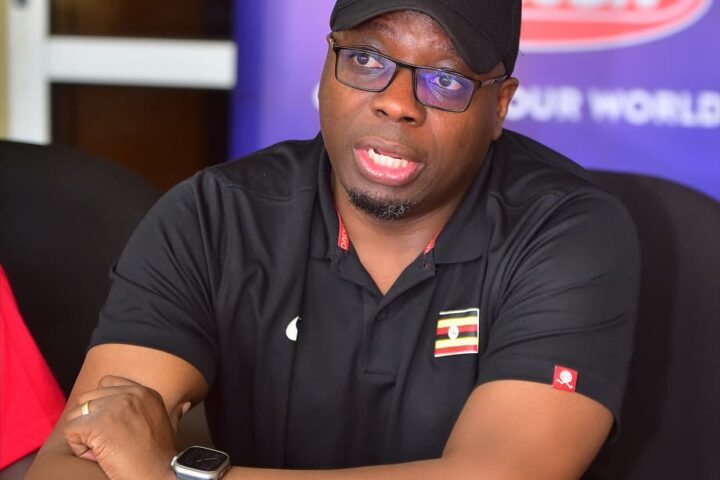
Uganda’s growing influence in international swimming administration will take centre stage at the Dakar 2026 Youth Olympic Games, where Uganda Aquatics secretary general Max Kanyerezi has been entrusted with one of the sport’s most critical officiating responsibilities.
Kanyerezi has been appointed an International Technical Official (ITO) and will serve as swimming referee at the Games, scheduled for October 31 to November 13 in Senegal.
Swimming competitions will run from November 1 to 6 at the Complexe Tour de l’Œuf in Dakar.
His appointment is a significant milestone for Ugandan aquatics, reflecting years of investment in technical expertise, competition management and the development of officials capable of operating at the highest level of the sport.
The assignment will require Kanyerezi to oversee the fair and proper conduct of races while preparing local technical officials for the competition.
He will also conduct training sessions and guide officials through the latest World Aquatics regulations to ensure the event meets international standards.
“I’m going to train the technical officials to prepare for the event, get the events set and ready, and prepare them with the latest World Aquatics rules so the event happens successfully,” Kanyerezi said.
“I will run a course for them, and I will be the referee.”

Beyond the individual recognition, the appointment carries historic significance.
Dakar 2026 will mark the first time an Olympic event has been staged on African soil, placing additional importance on the officials responsible for delivering competition to the required standards.
“This is a good thing for us as a country,” Kanyerezi said. “It is really big for us, and even for Africa.”
Building a new generation of Ugandan officials
Kanyerezi’s appointment also reflects Uganda’s efforts to develop a sustainable pipeline of international swimming officials rather than rely on isolated individual achievements.
He will be joined in Dakar by fellow Ugandan Brian Kisakye, one of the officials he has mentored and trained.
Their selection follows Ronitah Atwiine’s appointment as an International Technical Official at the 2024 World Aquatics Championships in Doha.
Kanyerezi believes Kisakye’s opportunity is a deserved reward for commitment and experience, as well as an important step in strengthening Uganda’s presence on the international officiating circuit.

“He deserves it. He has been put in the work and has been refereeing in many other countries,” he said.
“He will learn a lot and he will grow. These things need passion, dedication and articulation, knowing how to make things fair for all.”
Uganda has also sought to expand its representation on the World Aquatics list of qualified officials, with gender balance among its priorities.
The federation has introduced examinations to assess officials’ competence before they advance to higher levels.
“Our young officials are still learning to be professional, but they’ll step up,” Kanyerezi added.
From international swimmer to Olympic referee
Kanyerezi’s journey to Dakar has been shaped by decades of involvement in swimming, first as an athlete, then as a coach and now as a leading technical official.
He represented Uganda as a swimmer from 2006 to 2011, competing at the World Championships in 2006 and 2010, the 2006 Commonwealth Games and the 2011 All-Africa Games in Maputo.
After retiring from competitive swimming, he turned his attention to coaching and administration, leading Uganda’s swimming team, comprising Joshua Ekirikubinza and Jamila Lunkuse, at the Rio 2016 Olympic Games.
His subsequent transition into technical officiating opened another pathway to the Olympic stage.
Dakar will be his second Youth Olympic Games assignment following Buenos Aires 2018, while he also served among the heads of International Technical Officials at the Paris 2024 Olympic Games.
He has additionally officiated at the World Aquatics Championships between 2017 and 2020 and again in 2023.
“After reaching the peak, I went to develop other things,” he explained.
“I wanted to develop this thing of running events and make things up to standard.
That meant developing and training officials too.”
Raising competition standards at home
Away from the international stage, Kanyerezi’s contribution has extended to modernising swimming competitions in Uganda and improving the systems through which athletes are assessed.
Ugandan swimming has progressed from manual entries and timing to semi-automatic systems and, subsequently, full electronic timing capable of producing results in real time.
Kanyerezi has trained coaches to submit competition entries electronically and extended similar technical support to Tanzania.
He has also conducted World Aquatics technical officials’ courses in Egypt, Lesotho, Eswatini, Kenya, Tanzania and Burundi.
The objective, he says, is to create a reliable competition environment in which athletes can register credible times and measure themselves against international standards.
“Standards and competitions are what have made us grow and develop competitive swimmers,” he said.
“We want the best for these athletes. We just want them to swim and deliver times.”
He acknowledged the contribution of former Uganda Swimming Federation president Donald Rukare, now president of the Uganda Olympic Committee and head of Commonwealth Sport, in supporting the development of technical infrastructure and strengthening the federation’s international standing.
“Don helped a lot. He invested in the timing semi-automatic system at the time and has also earned respect around the world.
He made people believe in what we are doing,” Kanyerezi said.
“I don’t want to let him down. There is an image and a nation to protect.”
As Uganda prepares to be represented by two officials at Africa’s historic Olympic event, Kanyerezi’s assignment offers a broader measure of the country’s progress in swimming: not only through athletes competing in the pool, but also through Ugandans helping to uphold the rules, systems and standards governing international sport.