By Joseph Mbazzi Muguluma (Immanuel Ben Misagga)
There are some goodbyes a man prepares for, and there are others the heart simply refuses to rehearse.
This is one of them.
Moi, Papa Moses Matovu, sleep well.
I was not ready to say goodnight to you. I have been trembling as I write this, staring into that strange Lake between the two Mountains — the place where memories, grief and mortality meet.
I cannot imagine that I will never see you again.
Our last meaningful encounters were filled with the ordinary arguments of old men pretending not to count their years. At the Kwanjula in Luwero, it was Moi, Mbalire Frank and me, debating who among us was older. Moi claimed 78, according to his own arithmetic. Frank Mbalire stood at 74. And I remained the old boy somewhere in the middle of that journey.
I will never forget that gathering.
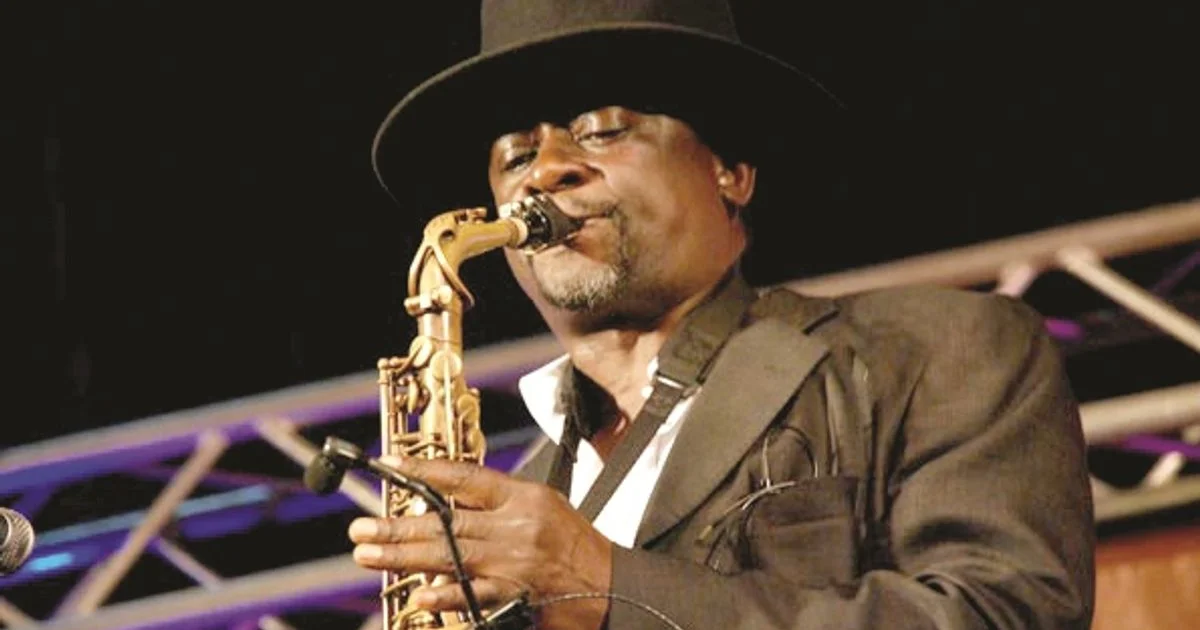
Akiiki Mansour, Papa Moi and I — three men who understood the language of brass. Three saxophonists in different ways, standing at the shore of the same musical river.
Mwannaa, Ben wesonyiwe.
But perhaps the greatest thing Moi ever gave me was not a song.
It was a proverb.
I was among the early patrons of Afrigo Band, back when the band was still a small flame burning in the darkness before the big stages, polished suits and national fame.
I knew Papa Moses Matovu and Akiiki Mansour closely. Not merely as musicians I admired, but as brothers.
Before performances, we would sit, talk and laugh. I would sometimes move with Madame. They knew the engineer in me. They knew I loved brass almost more than gold.
Then came Bukumunhe.
A story had exploded around my young family — rumours and newspaper headlines about IBM marrying a celebrated artist and radio presenter. Red Pepper, then still relatively young and loud enough to shake the streets, carried the story for weeks.
My name was everywhere.
My young family was under pressure.
The house had begun to smell.
There was Enva’nungi inside — something that had once been sweet and desirable but had overstayed its time. What had been tasty relish had started to rot, and its smell was beginning to consume the whole house.
Then Akiiki called me.
He did not call to gossip.
He called to build.
He told me he wanted to put up a house on his plot near the crossroads in Rubaga and asked me to come and look at the place. He trusted the engineer in me enough to help him think through the foundation and the slope.
After Kimeza at Obligato, around 9pm, Akiiki arrived.
We sat on low chairs, talking about iron, blocks, foundations and the direction of the wind.
Around 10pm, Papa Moi arrived.
Slowly.
With that familiar smile.
His saxophone case rested on his lap almost like a child.
He listened for a few minutes before looking at me. Perhaps he saw the exhaustion in my eyes — the eyes of a young man whose home had become a place of suffocation.
Then, laughing, with that unforgettable gap between his teeth, he said:
“Mwannaa… Envanungi zigaga mangu.”
Tasty relish gets spoiled very quickly.
Ggwe!
That sentence did not merely reach my ears.
It entered my heart.
Moi had not delivered a sermon. He had not given me a lecture on marriage, family or separation.
He simply played a proverb.
But the meaning was long.
I understood.
You cannot keep something that has started to rot inside a closed house and hope that it will somehow become fresh again. If the smell has begun to spread, eventually it consumes everything around it.
That proverb helped me save my young family.
That night, I made a decision.
I removed the roof sheets from the house that was holding the Enva’nungi.
I allowed the rain in.
I allowed the wind in.
I allowed the thunder to wash the walls.
And I allowed the marriage that had become Bukumunhe to leave with the wind.
Moi never knew, perhaps, the full weight of what he had done.
He did not preach.
He simply breathed into a proverb the way he breathed into his saxophone — a short breath, but a meaning that could travel for generations.
And now, Papa, your own breath has stopped.
But your music has not.
Because of the way you lived and the culture you carried, you did not leave with your saxophone as Akiiki Mansour did. Akiiki departed with his brass seemingly locked inside his chest.
You left yours here.
At MMJ Cottages, Bunjako.
Facing the lake.
So when the night wind comes across Lake Victoria, I imagine it passing through your mouthpiece.
And somehow, it plays.
Your note joins a long procession of great saxophonists who turned breath into memory.
Moses Matovu of Kampala now belongs in that conversation with John Coltrane of New York, who transformed the language of jazz into spiritual confession.
With Charlie Parker — Bird — who seemed to fly beyond every boundary placed before him.
With Cameroon’s Manu Dibango, whose Soul Makossa carried African rhythm across continents.
With Grover Washington Jr., who could make a saxophone whisper.
With Stan Getz, whose sound became inseparable from the cool elegance of bossa nova.
With Kenny G, who demonstrated how a gentle saxophone line could travel far beyond the traditional jazz room.
And with our own Isaiah Katumwa, who continued to keep the Ugandan saxophone voice alive when other sounds threatened to dominate the stage.
But, Papa Moi, there is one thing none of them did for me.
None of them gave me the proverb that made me understand when it was time to remove the roof.
“Envanungi zigaga mangu.”
Only you did that.
That is why this goodbye hurts differently.
I cried when Philly Bongole Lutaaya died.
I cried when Lucky Dube died.
I cried when Princess Diana died.
I nearly cried when Kazini and Kiddu died.
I cried for Whitney Houston and Luther Vandross.
But with you, Moi, the tears have come differently.
I have cried while trembling, standing at the crossroads of memory and disbelief, wondering how a man whose saxophone filled so many rooms can suddenly become a memory himself.
Joanita Kawalya, jangu wano.
Come here.
We have travelled a long way.
MMJ Cottages will hold Papa Moi’s saxophone.
And when the wind comes from the lake and the brass begins to speak, my grandchildren will ask:
“Who is playing?”
I will tell them:
“That is Papa Moi.”
He is still playing.
He is still teaching.
And somewhere between the lake, the wind and the silence, he is still reminding us:
“Envanungi zigaga mangu.”
Sleep well, Papa Moi.
You are not simply gone.
You are tuned to a frequency our noisy ears can no longer hear.
Tuvudde wala.
Ezziga ly’omukulu livaa wala, naye mazima wankabiza, Papa Moi.
Tunatoka Bali sana.