37 Years Later, an Empty Odeon Seat Still Bears the Weight of a Broken Brotherhood
By
Some lessons are never taught in lecture halls.
They are found in the quiet corners of memory, in the traditions of ancestors, and sometimes in the painful realisation that a single moment can alter the course of a relationship for decades.
At the shrine of the Mutima Omuyanja clan in Bbale, Kafuluma, Kyotera, Buddu, the mystery of love is said to be understood beyond the limitations of a single word.
In English, it is love. In Luganda, nkwagala. In Runyankole, ninkukunda. In Lusoga, nkwendha.
One word, yet a universe of emotions.
You love your mother, your wife, your friend, your country, your football club and your God. But, as the ancient Greek philosophers recognised, love does not occupy a single room in the human heart.
It has many rooms, each with its own character and fire.
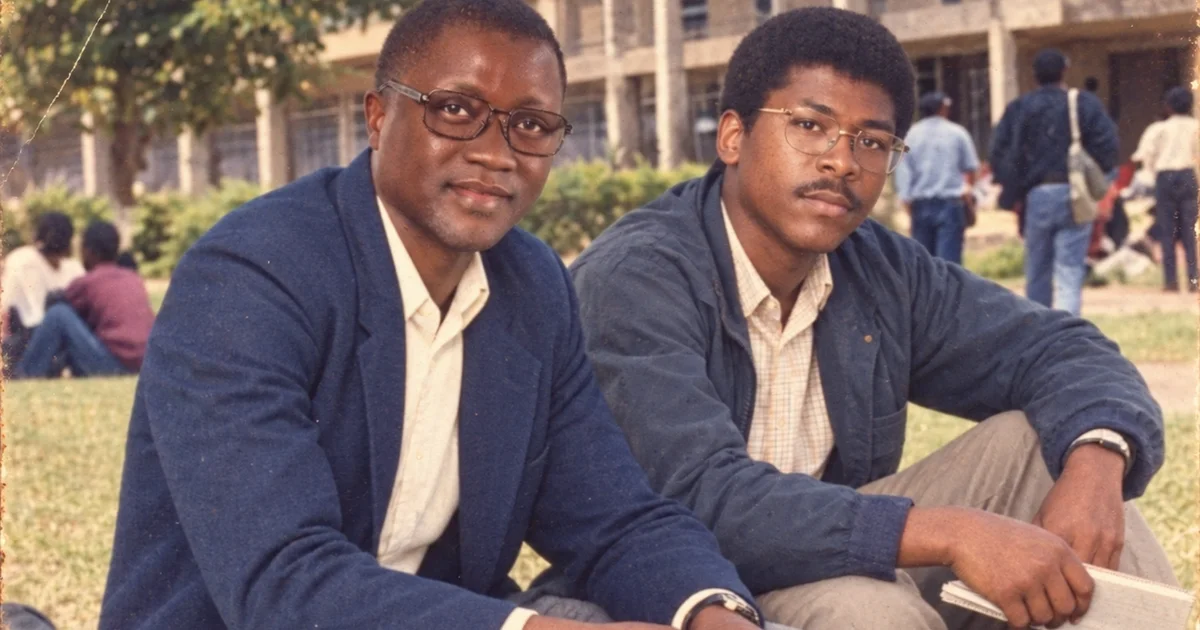
The Kifuuta tradition, in this telling, meets that ancient Greek understanding in a deeply personal story — one that began in Nairobi in 1987 and has remained unresolved for 37 years.
At its centre are two young engineering students: a Ugandan and a Giriama from Malindi, Eng. Nzaro.
They were more than coursemates.
They became brothers.
Nzaro introduced his Ugandan friend to the Indian Ocean, took him to Mombasa and Malindi, and welcomed him into the wider Musafiri family. Their friendship became so deep that their tutor, Mr Tunde Othieno, reportedly mistook the Ugandan student for someone from Malindi.
They had, in effect, become part of one another.
That was Philia — the Greek conception of brotherly and enduring friendship.
But their relationship, the story suggests, eventually grew beyond Philia.
It became Pragma, built gradually through trust, shared experiences and family connections.
It became Storge, the affection of people who, though not related by blood, begin to regard one another as family.
And then, one afternoon at Nairobi’s Odeon Cinema, everything changed.
The One-Hour Wait
The appointment was simple.
2:45pm. Odeon Cinema.
An Amitabh Bachchan film was about to begin.
The young Ugandan arrived and took his seat.
2:45pm passed.
Then 3:00pm.
Then 3:30pm.
Nzaro was nowhere to be seen.
The film began.
At about 4:00pm, almost an hour after the agreed time, Nzaro finally appeared, breathing heavily.
“Sorry, my brother,” he whispered.
But there was no response.
The hurt had already hardened into silence.
When the film ended, the Ugandan walked out, boarded a matatu to Lavington and left Nzaro behind at the cinema.
That moment, he now believes, marked the death of their Philia.
But perhaps something else happened.
Two other forms of love entered the room: Mania and wounded Philautia.
Mania — obsessive and possessive love — interpreted the lateness as betrayal.
Philautia — self-love — turned wounded pride into a demand for punishment.
The question was no longer why Nzaro was late.
The question became: How could someone who loved me make me wait?
And so a one-hour delay became a 37-year silence.
When Love Becomes a Prison
The Greek taxonomy of love offers eight familiar categories: Eros, romantic desire; Philia, friendship and brotherhood; Storge, familial affection; Pragma, enduring love built over time; Ludus, playful affection; Agape, selfless love; Philautia, self-love; and Mania, obsessive love.
The lesson is not simply philosophical.
It is deeply human.
A person can love another sincerely and still allow hurt, pride, jealousy or disappointment to distort that love.
The tragedy of the Odeon story is that the friendship did not necessarily end because love disappeared.
It may have ended because wounded pride became stronger than forgiveness.
Nzaro came.
He was late.
But he came.
For the narrator, that distinction has taken nearly four decades to fully appreciate.
A 37-Year-Old Realisation
Now, as an elder looking back on the friendship, the narrator sees the incident differently.
Nzaro went on with his life, became an engineer and built his own journey.
The person who remained trapped in 1987 was the one who never returned to the conversation.
For 37 years, he says, he has remained metaphorically seated inside Odeon Cinema — watching the same Indian film, with an empty seat beside him.
The question is therefore no longer whether Nzaro was wrong to arrive late.
He was.
The deeper question is whether one mistake deserved to become a lifetime sentence.
That is where Agape enters the story.
Agape represents a form of love that gives, forgives and does not make affection conditional upon perfection.
And forgiveness, in this context, is not an admission that the hurt was insignificant.
It is a decision not to allow the hurt to govern the rest of one’s life.
The Call to Reconciliation
The confession ends with a simple but profound appeal.
After 37 years, the narrator wants the empty seat beside him filled again.
He remembers Dr Solomela Nyambura, who once attempted to mend the friendship, and now extends an invitation for reconciliation.
“Bring my brother back.”
It is a plea that reaches beyond Nzaro.
It speaks to anyone who has allowed an old wound to become an identity, anyone who has mistaken silence for justice, or anyone who has allowed pride to outlive the relationship it was meant to protect.
Perhaps that is the deeper lesson of the Kifuuta story.
Love is too large for one word.
Eros may ignite it. Philia may build brotherhood. Storge may make strangers family. Pragma may give it endurance. But Agape gives it the power to forgive.
And somewhere in Nairobi, in the imagination of a man who has carried this memory for 37 years, there is still an empty seat at Odeon Cinema.
This time, he is ready to stop watching the past.
He wants his brother back.