There are friendships that survive distance, poverty, success and silence. Then there are friendships that survive only as long as there is something to be gained.
I learned the difference the hard way.
Today, I am no longer interested in having thirty people around my table. I would rather have two genuine friends who would walk with me to Kifuuta Katooke, Kyotera, Buddu, when my journey on earth is finally over.
For me, those two are senior lawyers Ali Ssekatawa and Friday Kagoro.
The rest of the story belongs to the lessons Kampala taught me.
When pork was a Saturday religion
In Kampala in the late 1990s, roasted meat had almost become a religion among the young professional elite.
Saturday was not for sitting at home. Home was for Monday.
We gathered at places such as Yakobo Joint in Ntinda and Nakawunde’s pork joint on Entebbe Road. Smoke rose into the evening, music competed with laughter, wallets were generous and the city seemed young enough to belong to us.
There were more than thirty of us — engineers, bankers, lawyers, rally drivers and other professionals. Only four ladies were admitted into our circle, and they were mature, accomplished and without worokoso.
Among us was a distinguished former mayor of Entebbe from the Obote era. He was about 45, impeccably dressed, deeply Catholic and carried himself with an almost theatrical sense of class. Every morning he attended Mass at Christ the King, his golden rosary and ring visible, while a vintage Wogan waited outside.
And then there was me.
A young man from Kifuuta, Masaka side, travelling all the way from Tororo in a 1972 Land Rover without doors.
No doors.
But plenty of heart.
The wind hit my face, dust entered my eyes, and I drove into Kampala believing that these sophisticated men knew something about life that I needed to learn.
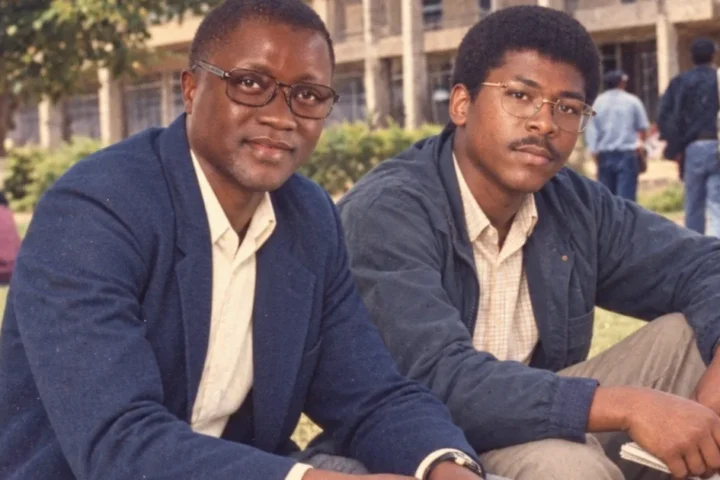
The man I called brother
Among that crowd, one lawyer caught my attention.
He was young, intelligent and Catholic like me. He also came from near my home area in Masaka. That connection was enough for me to make him a brother.
Others did not seem to connect with him as easily. Sometimes he could not contribute much financially when the group met.
So I helped.
I paid bills. I bought fuel for his old, struggling Mercedes-Benz. I took him to Afrigo Band performances, Mist Bar at the Sheraton and Lucky Dube concerts. I wanted him to feel that he belonged.
Eventually, I introduced him to my wife and children.
He knew my family.
But I never knew his.
I did not understand the significance then.
Years later, I would realise something painfully simple:
When someone knows your children by name but you have never been allowed through the gate of their family, you may not be family. You may simply be useful.
The friendship travelled beyond Kampala
In 2006, I began working in Namibia.
Yet I would fly back for our Saturday gatherings.
That was how seriously I took the friendship.
I travelled with him to Lusaka. We went to East London in South Africa. We made the long road journey from Cape Town to Durban. I bought fuel, paid bills and stood beside him at burials.
He visited me in Lusaka.
I gave him roads, opportunities, money, introductions and, above all, trust.
Then one evening at Yakobo, someone pulled me aside.
“Leave this man before he stabs you.”
I laughed.
I thought it was jealousy.
I did not listen.
The first taste of money
Then came Bukumune.
New Vision’s Have You Heard column published a sensational claim that I was going to marry a named radio and drama actress.
It was false.
My lawyer-friend was furious.
“We sue them.”
We did.
The case eventually brought us about Shs12 million in those days. I was not interested in the money for myself. I wanted my young wife to have it as acknowledgement that the publication had been wrong and to give her some peace.
But perhaps that was where another chapter began.
Empisi had tasted blood.
And, as the Kifuuta Oracles say, an Empisi never forgets the taste of blood.
When the friendship became a business
Years passed.
I returned more permanently around 2014 and became President of SC Villa unopposed.
New Vision published another negative story about me.
My lawyer-friend appeared again, this time with an aggressive legal strategy.
“Sign the affidavits. We sue them. The claim can exceed Shs200 million.”
But I had changed.
I had previously been the National Fans Coordinator. I understood publicity. I wanted SC Villa to be visible, discussed and relevant.
A massive legal battle against a newspaper was not what I wanted.
I resisted.
Eventually, lawyers acting for New Vision — including people I had known through my professional dealings — approached me about settling the matter out of court.
I agreed.
I wanted peace.
I met the other side and gave my word that I would not proceed with the case. There was an understanding around a fee of roughly Shs20 million.
I instructed that the cheque be written in the name of the law firm representing me.
His law firm.
In my mind, I had found a way to end the dispute while ensuring that my friend’s firm was paid for its work.
I thought the matter was finished.
It was not.
The summons that changed everything
The next thing I received was a court summons.
From my brother.
The claim was that I owed him money for legal representation.
I was stunned.
I contacted members of our old group and asked them to help us sit down and resolve the matter.
He did not come.
He sued.
What followed has cost me more than Shs200 million.
More than Shs200 million.
For a friendship that once involved fuel money, road trips, burials, Saturday pork, family introductions and years of standing beside one another.
That is when I finally understood what the old warning at Yakobo had meant.
The Kifuuta lesson: Empisi does not always arrive growling
The Kifuuta Oracles have a saying:
“Empisi egenda okufa bw’ogiyambaza, ekulya bw’emala okuwona.”
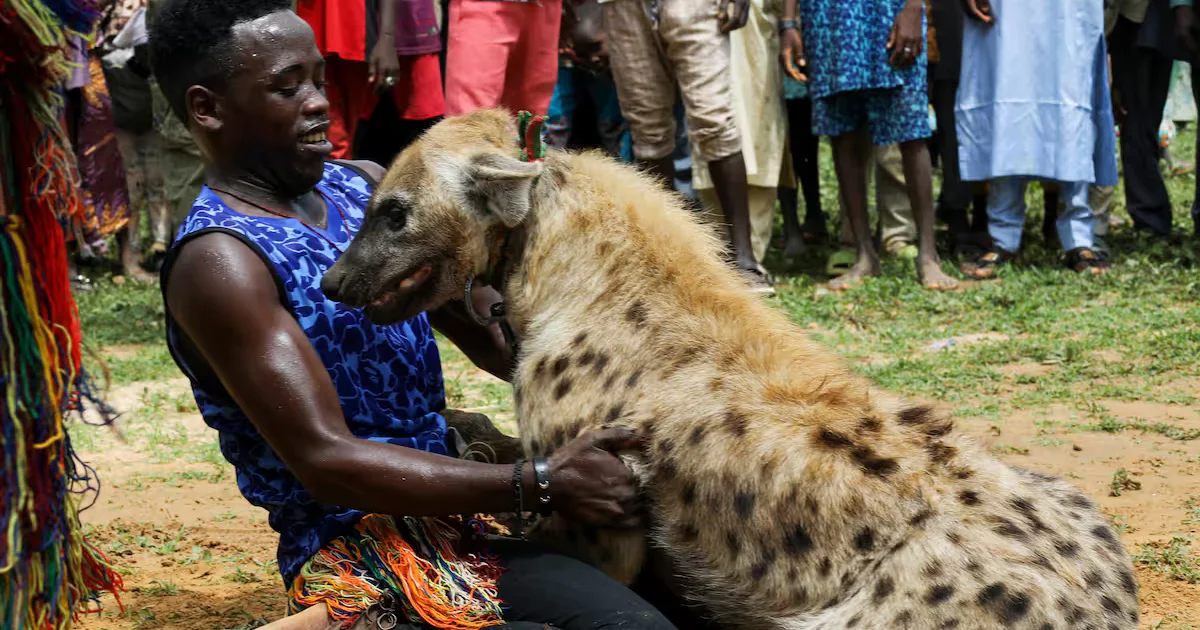
The meaning is brutal but simple: the hyena that is dying by the roadside may eat you after you rescue it and it recovers.
Empisi does not always arrive looking dangerous.
Sometimes it arrives limping.
A Benz is limping.
A pocket is empty.
A story is painful.
You feel sympathy.
You help.
You carry.
And once the animal recovers, it may turn around and bite the very person who lifted it.
That is the danger of confusing someone’s dependence on you with genuine affection for you.
A friend who knows everything about you but reveals nothing about himself
Looking back, the signs were there.
I knew his financial struggles.
I knew when he needed fuel.
I knew his movements.
He knew my wife.
He knew my children.
He knew my professional life.
But I barely knew his home.
I had mistaken access for intimacy.
A true brother opens the gate.
An Empisi opens only its mouth.
And when you become successful, the difference becomes even harder to see.
When I was flying in from Namibia just to attend Saturday gatherings, when I became SC Villa president, when my name carried weight, perhaps some people were attracted not to my friendship but to the light surrounding me.
The lesson I should have learned earlier
One of our elders warns us through the wisdom of lukiiko: ebigambo bitereezebwa mu lukiiko — difficult matters are best settled through counsel and dialogue.
I should have listened.
When someone warned me once, I laughed.
When the friendship reached a point where elders and colleagues could have helped us sit together, I should have insisted.
Instead, the disagreement went from friendship to lawyers, from lawyers to court and from court to enormous financial consequences.
I learned another lesson too:
Never confuse generosity with a contract, and never assume that friendship removes the need for clarity.
If it is a gift, give it freely and forget it.
If it is business, put it in writing.
If it is a loan, document it.
If it is professional work, agree on the terms.
Paper does not destroy friendship.
Sometimes, paper is what protects it.
Learn to say no
My greatest mistake may not have been giving.
It may have been failing to say No.
I wanted publicity for SC Villa.
He wanted litigation that could potentially run into hundreds of millions.
I should have said no much earlier.
A respectful no today can save you millions tomorrow — and sometimes save your heart as well.
Jesus taught us to feed the hungry.
But feeding someone does not mean handing them every key to your life.
Help people.
Love people.
But test character gradually.
Thirty Saturday friends are not two bone friends
Today, I prefer a smaller circle.
Thirty people can share pork with you on Saturday.
But when your bones are finally being carried to Kifuuta, how many will still be there?
That is the test.
The real wealth of a man is not the thickness of his wallet at a Kampala pork joint.
It is the number of people whose loyalty does not have a price.
My doorless 1972 Land Rover is gone.
Yakobo has changed.
The Kampala of 1999 is no more.
But Kifuuta Katooke remains.
And one day, that is where I want to return — not carrying anger, not carrying court papers, not carrying unpaid emotional debts.
Just carrying a clean heart.
I have finally put the stone down.
I forgive.
I move on.
Let Empisi walk its own road.
And perhaps that is the final lesson:
Do not allow betrayal to turn you into a bitter person. Learn the lesson, reduce the circle, protect your generosity and keep walking.
Because true riches are not found in a crowded Saturday joint.
True riches are going to sleep before God with a heart that is free of bitterness.
And as the Kifuuta Oracles say:
Tukwatagane ku Mbuuga ewa Jjaajja.
— Oracle of Kifuuta Katooke
The man who carried Empisi — and lived to tell the story.