We are often too quick to write stories about people from moments we barely understand.
You meet someone for five seconds and convince yourself that you have understood fifty years of their life.
A person fails to smile at you, and you call them arrogant. Someone drives slowly in front of you, and you call them foolish.
A woman answers sharply at a counter, and you decide she is simply rude.
But what if you are witnessing only a fragment of a story whose pages you have never read?
We meet people in tiny moments of their enormous lives.
That five-second encounter is all we see. Yet from it, we sometimes construct a fifty-year judgment.
Perhaps we should be more careful.
The person who did not return your smile may have spent the morning fighting back tears.
The driver you angrily hooted at may be struggling with fear after surviving a terrible accident.
The person who spoke harshly to you may be carrying a burden so heavy that courtesy has temporarily become difficult.
We rarely know.
And perhaps that is why one lesson from my childhood has stayed with me for years.
Jjaajja Nabudoli and the Smoke That Carried Memories
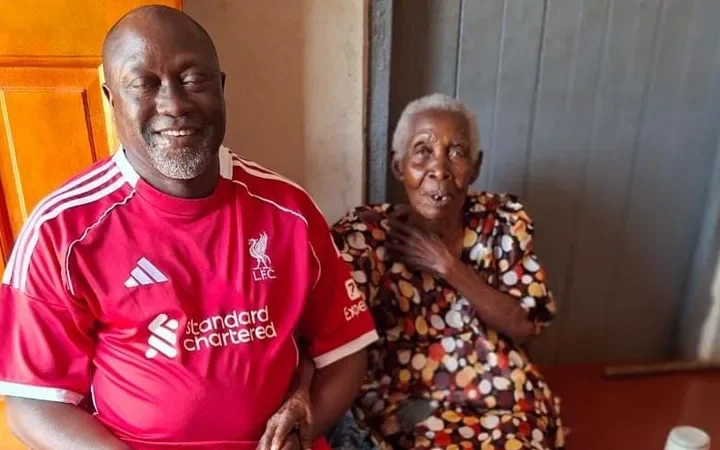
When I was a little boy, I used to visit my Jjaajja Nabudoli Maria in Mbulamuti, Kisozi, Namasagali.
She often sat beneath a mango tree with her small Emindi, smoking Tabba.
To a ten-year-old boy, it was a strange sight.
I could not understand where the smoke went after she puffed it. I also noticed that she sometimes talked to herself—laughing, arguing, remembering.
In my innocent mind, I wondered whether Jjaajja was simply behaving strangely.
One day, I gathered enough courage to ask her.
“Jjaajja, why do you talk alone? And why do you smoke Tabba?”
She looked at me with the quiet eyes of someone who had already lived through nearly a century. Then she smiled.
“Kula oliginywa. Nawe kula olimunywa.”
Grow up, and you will smoke it too.
At ten, I did not understand her.
Growing older, however, has a way of translating the words of elders.
I began to understand that perhaps Tabba was never merely about smoking.
It was memory.
It was companionship.
It was a doorway into a world that had slowly disappeared around her.
She had lived through relationships, children, movement, loss and decades of change. She had memories of people and places that no longer existed in the same way.
She once told me about Jjaajja Naidoo, who, according to her recollection, came from Goa, India, and worked as a chief engineer on the railway route between Kisumu and Namasagali.
She remembered travelling, loving, raising a family and living through a different era.
Those memories were still alive inside her long after many of the people who created them had gone.
So when she sat beneath the mango tree and spoke alone, perhaps she was not speaking to nobody.
She was speaking to the people and memories that remained with her.
Sometimes Loneliness Has a Voice
Loneliness can make people behave in ways we do not immediately understand.
An empty house can become louder than a crowded street.
When children grow up and leave, when friends disappear, when familiar voices become distant memories, silence can become difficult to carry.
An elderly person who talks to themselves may simply be revisiting memories.
Someone who constantly listens to music may be escaping a home where nobody listens.
A person who appears angry may be exhausted from fighting battles they have never told anyone about.
The world is full of people carrying invisible histories.
We see the behaviour.
We rarely see the reason behind it.
And that is where our judgments often fail us.
The boda boda rider who speaks rudely may have spent the morning worrying about rent.
The worker who makes a mistake may have spent the previous night awake with family problems.
The friend who failed to attend your gathering may have lacked the means to come but felt too embarrassed to explain.
None of these explanations excuses every wrong action.
But understanding the possibility of a hidden story can change the way we respond.
Do Not Confuse a Moment With a Person
A five-second encounter is not a biography.
A bad morning does not necessarily make someone a bad person.
A difficult response does not tell you everything about someone’s character.
And one unusual habit cannot possibly explain an entire human life.
Every person we meet has a history that began long before we entered the scene.
They have known happiness we never witnessed.
They have suffered disappointments we never heard about.
They have lost people whose names we may never know.
They have carried responsibilities that may never appear on their faces.
We are all seeing only a fraction of one another.
That should make us slower to condemn and quicker to understand.
The Lesson Jjaajja Left Behind
Jjaajja Nabudoli eventually died at the age of 108.
Her pipe went cold.
The mango tree remained.
The memories remained.
And those words she once told me as a curious ten-year-old boy remained even more strongly:
“Kula oliginywa.”
Grow up, and you will smoke from the same Emindi.
Perhaps growing up is not simply becoming older.
Perhaps it is learning what childhood cannot yet comprehend.
It is discovering that people are complicated.
That loneliness has many faces.
That grief does not always cry.
That pain does not always announce itself.
And that the person standing before you may be carrying an entire lifetime behind a perfectly ordinary expression.
So, while we still have time, let us enjoy the people around us.
Smile when we can.
Laugh with our friends.
Greet people.
Forgive where forgiveness is possible.
Sit together a little longer.
Say the important things while there is still someone there to hear them.
Because life is both short and profound.
And the next time someone does not smile back, drives too slowly, answers sharply or behaves in a way you do not understand, remember this:
You have seen five seconds of their life.
You have not seen their fifty years.
Sometimes, what we call strange is simply a story we have not yet learned to understand.