By Eng. Joseph Mbazzi Muguluma Immanuel Ben Misagga
There is a stage of life we rarely prepare people for.
We spend years preparing children for school, young people for careers, and adults for marriage, parenthood and financial responsibility. But very few people prepare seriously for the years between 60 and 85—the years when life begins to demand a different kind of wisdom.
Growing older is not necessarily the hardest thing about ageing. The hardest part is learning how to live differently when many of the things that once defined you begin to change.
Your body changes. Your friends become fewer. Your children become busy with their own families.
Retirement removes the routine that once occupied your days. You lose people you loved. And sometimes, after spending decades being a provider, worker, parent or community leader, you suddenly ask yourself:
“Who am I now?”
That question can be frightening.
But I believe the answer should not be retirement from life.
It should be a new beginning.
The mistake is preparing only to survive old age
Many people plan financially for retirement, but very few plan emotionally and socially for it.
We save money. We build houses. We educate our children. We buy land.
But do we plan who we will talk to when the house becomes quiet?
Do we plan what we will do with our mornings?
Do we plan how we will remain physically active when our bodies can no longer do what they did at 40?
Do we plan how to deal with the loss of friends, siblings and spouses?
That is why the years from 60 to 85 should not be treated as a waiting room for death.
They should be planned as years of purpose.
Not necessarily bigger achievements. Not necessarily wealth.
Purpose.
Your body will change. Your attitude must change with it
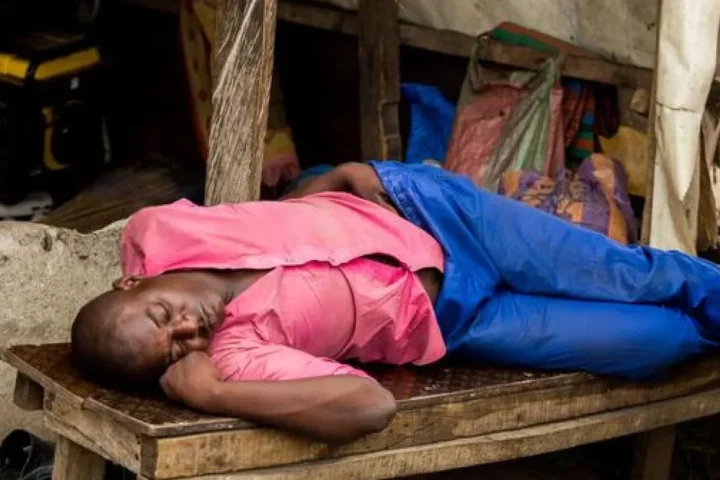
One morning, you may discover that rising from a chair takes a little longer.
The stairs that once meant nothing now require a pause. The small shopping bag from the market suddenly feels heavier than it used to.
Inside, you may still feel 30.
Your knees, however, may have other opinions.
That does not mean you have failed.
It means the rules have changed.
The objective should no longer be proving how strong you are. It should be remaining active and independent for as long as possible.
Walk. Stretch gently. Tend a garden. Water your plants. Do simple activities around the home.
If you have been advised by a health professional to exercise in a particular way, follow that guidance.
And do not be ashamed of using spectacles, a walking aid or accepting help with heavy work when necessary.
Accepting help is not surrendering your independence. It can be a way of protecting it.
Save your strength for the things that matter.
The greatest danger may be an empty social calendar
There is another change that can be more painful than physical ageing.
Your circle becomes smaller.
Friends move away. Some become ill. Others pass on. Your children establish their own homes in Kampala, Kyotera or even abroad.
Then comes an ordinary Tuesday afternoon.
The house is quiet.
The telephone has not rung.
And you realise that nobody has checked on you all day.
This is where we must stop waiting.
Connection has to become intentional.
Call an old friend every Sunday. Check on a neighbour. Join a church, mosque, community group or elders’ gathering. Teach a grandchild something you know.
You do not need fifty friends.
Sometimes one meaningful conversation is enough to make an entire week feel different.
And while we should be careful about turning every feeling of loneliness into a medical claim, there is no doubt that meaningful human connection is an important part of healthy ageing.
Then come the goodbyes
Ageing also means accumulating memories—and, sadly, losses.
By 70, many people will have buried friends and relatives they once imagined growing old with.
Grief does not follow a timetable.
A song on the radio can bring back someone you loved. An empty chair can suddenly become a memory. A familiar smell can transport you decades into the past.
Do not be ashamed of remembering.
Say their names.
Tell their stories.
Keep photographs.
Visit their resting places when that brings you comfort.
But remember something equally important:
The death of someone you loved does not require the death of your own life.
Their chapter may have ended, but yours has not.
Perhaps retirement is an invitation to rediscover yourself
For decades, your identity may have been clear:
Worker.
Father.
Mother.
Farmer.
Businessperson.
Provider.
Leader.
Then retirement arrives.
The children leave home.
The compound becomes quieter.
And suddenly there is time—perhaps more time than you know what to do with.
That can be unsettling.
But perhaps we have misunderstood retirement.
Perhaps retirement is not the end of usefulness.
Perhaps it is the opportunity to decide what usefulness means when nobody is paying you for it.
Plant an orchard.
Write your family history.
Teach your grandchildren the stories of Kifuuta and the people who shaped your community.
Visit a neighbour.
Mentor a young person.
Attend community gatherings.
Learn something new.
Pray.
Read.
Listen.
Laugh.
A life does not lose its value simply because employment has ended.
Plan your days like you once planned your work
Purpose becomes easier when it has structure.
You could make your week deliberately simple:
Monday: Call your children or grandchildren.
Tuesday: Work in your garden or orchard.
Wednesday: Visit a friend or neighbour.
Thursday: Record family stories and history.
Friday: Go to the trading centre and interact with people.
Saturday: Rest, listen to music or read.
Sunday: Attend church or mosque and greet people you know.
It is not about following this exact timetable.
It is about having something to look forward to.
Because sometimes the most powerful medicine for an ageing mind is simply knowing:
“Tomorrow, I have somewhere to go and someone to see.”
And yes—keep the music alive
I strongly believe that music should remain part of old age.
Do not allow your radio to become a 24-hour funeral.
There is a place for spiritual music, prayer and reflection. But life also deserves music that makes you smile.
Listen to Amapiano. Afrobeat. Congolese rumba. Reggae. Old Ugandan classics. New Ugandan music.
Let your grandchildren teach you how Bluetooth works.
Let them introduce you to the songs they enjoy.
If you can safely dance a little, dance.
If you cannot, move your shoulders from the chair.
The point is not to pretend you are 25.
The point is to remain curious about life.
Music can connect generations. A grandparent and grandchild laughing over a new song may create a memory that lasts much longer than the song itself.
Your greatest legacy may be what you leave in people
At some point, the question changes from:
“What more can I achieve?”
to:
“What can I pass on?”
Plant trees whose shade you may not fully enjoy.
Write down the family history before the people who remember it are gone.
Teach a child the skill your parents taught you.
Tell stories.
Preserve names.
Pass on values.
The mango tree you plant today may one day provide shade for grandchildren who will never know exactly how much effort it took to put it in the ground.
That is legacy.
You do not have to become President to have a meaningful purpose.
The final battle is the battle of the mind
Perhaps the most important lesson is this:
Growing older should not mean becoming emotionally old.
Your body may become slower while your mind remains curious.
Your responsibilities may become fewer while your wisdom becomes greater.
Your social circle may become smaller while your relationships become deeper.
Your possessions may matter less while your memories matter more.
The years between 60 and 85 will bring losses. That is unavoidable.
But they can also bring freedom, laughter, grandchildren, friendship, music, gardens, stories, faith, reflection and a deeper appreciation of ordinary mornings.
So plan for those years.
Plan your finances, yes.
But also plan your friendships.
Plan your health.
Plan your purpose.
Plan your music.
Plan your legacy.
And when morning comes, get up and participate in life.
Plant now.
Call someone now.
Forgive now.
Walk now.
Tell the story now.
And, where your body allows it, dance now.
Growing older is not simply about holding on to the person you once were.
It is about discovering how much life can still be lived by the person you have become.
Do not spend your later years waiting for the end.
Give them purpose. Give them music. Give them people. Give them life.
— Eng. Joseph Mbazzi Muguluma Immanuel Ben Misagga