As Uganda confronts worsening urban air pollution and the wider threat of climate change, the growing conversation around electric mobility is no longer simply about replacing petrol and diesel vehicles with new technology.
It is increasingly about how the country can build a cleaner, more sustainable transport system.
Against that backdrop, the partnership between Mandela Group and Linglong Tyres is taking on a significance that extends beyond the commercial promotion of tyres.
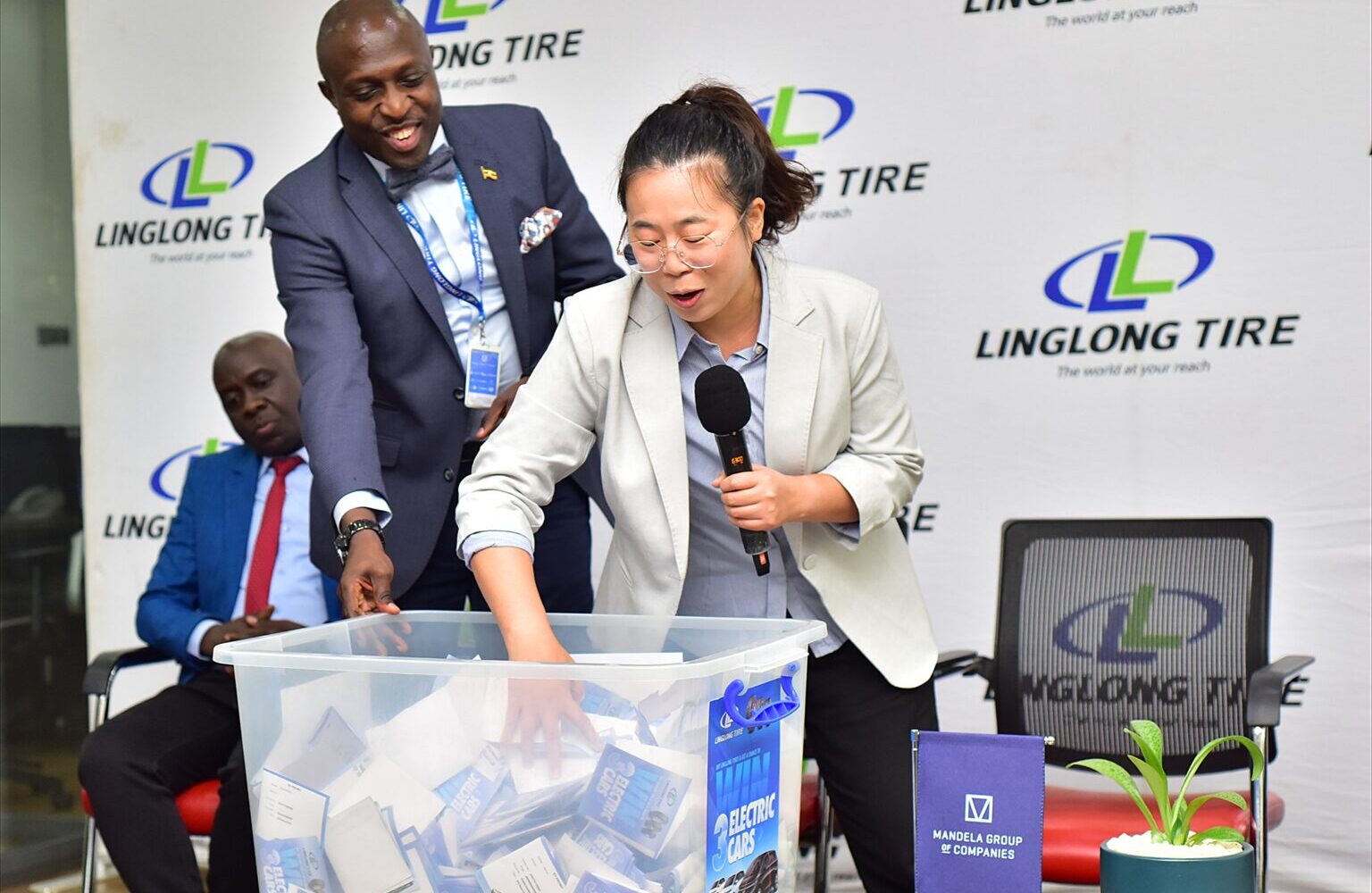
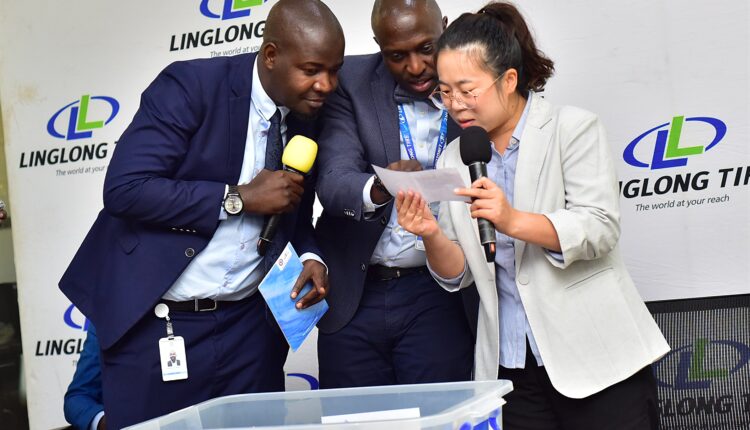
The partnership’s latest activation—the fifth raffle draw under the Linglong Tyres EV Promotion—ended with Kizza Rogers winning a brand-new electric vehicle after purchasing Linglong tyres from the City Tyres Bombo Road branch.
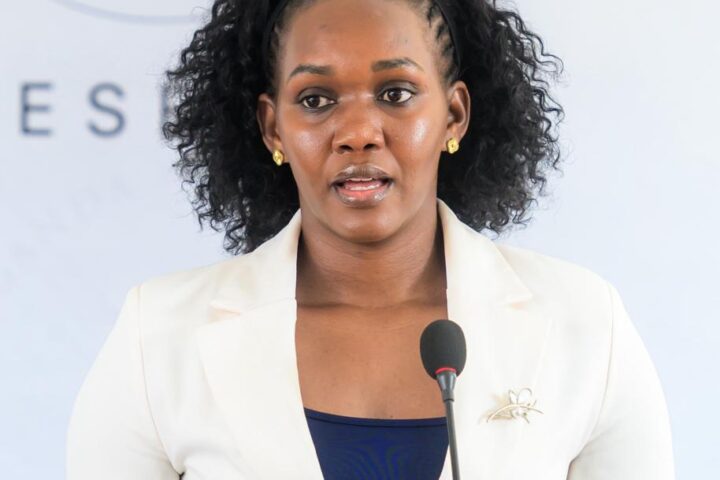
The draw was conducted on Wednesday at Mandela Group’s head offices on Sixth Street, Industrial Area, Kampala, by Tina Wang, Linglong Sales Executive Manager for the Middle East and Africa.
While the promotion is designed to reward customers, the growing visibility of electric vehicles through such initiatives also offers Uganda an opportunity to deepen public awareness about cleaner mobility.
An environmental question hiding inside a commercial promotion
Uganda’s transport sector has a major environmental footprint.
UNEP says transport accounts for about half of the country’s energy-related greenhouse-gas emissions, while research on Kampala has found that vehicles are responsible for a substantial share of the city’s air pollution.
UNEP – UN Environment Programme +1
This makes the transition towards cleaner vehicles particularly relevant to Kampala and other rapidly urbanising areas.
Unlike conventional vehicles, battery-electric vehicles have no tailpipe emissions while being driven.
Their overall climate benefit, however, depends partly on how the electricity used to charge them is generated and on how batteries are produced, used and eventually recycled.
UNEP therefore views electric mobility as part of a broader transition that should also incorporate cleaner electricity, sustainable battery management and improved transport planning.
UNEP – UN Environment Programme +1
For Uganda, where electricity generation provides an important foundation for the energy system, expanding electric mobility could therefore become one component of a broader strategy to reduce the environmental pressure created by road transport.
From a prize to a conversation about mobility
For Mandela Group and Linglong, the EV promotion has already produced several beneficiaries, including inaugural winner John Bosco Mugisha, Godfrey Kyeyune and Florence Nandede of Mbale.
Rogers became the latest winner after the first selection landed on Ssemakula, who could not be reached by telephone.
A second draw subsequently produced Rogers, who is scheduled to receive the vehicle’s keys at Mandela Group’s Industrial Area premises.
For Wang, the partnership is also about building confidence in Linglong’s products and maintaining a relationship with Ugandan consumers.
“We have the best partner in Africa, Mandela Group, and I thank the customers for supporting us.
We at Linglong shall continue improving the quality of our products,” Wang said.
That message becomes particularly relevant as the tyre and automotive industries increasingly intersect with the sustainability agenda.
Electric vehicles still depend on tyres, roads and the wider transport ecosystem, meaning the environmental transition cannot be reduced to the vehicle’s powertrain alone.
Why the EV conversation matters for Uganda.
Kampala’s air-quality challenge provides a compelling local context.
A UNEP-supported real-world emissions study found that particulate matter levels in Kampala were 12 times higher than the World Health Organization’s safe guideline level, with transport accounting for about 60 per cent of the measured emissions in the study.
The findings have reinforced calls for cleaner vehicles, stronger emissions standards and better vehicle inspection.
UNEP – UN Environment Programme
Electric vehicles can help address one part of this challenge by eliminating tailpipe pollution from vehicles that are fully battery-electric.
This gives private-sector initiatives such as the Mandela Group–Linglong promotion a wider context: every electric vehicle placed in the hands of a Ugandan consumer can also become an opportunity to familiarise the public with a different model of mobility.
Building partnerships beyond business
The partnership’s environmental conversation is unfolding alongside other efforts to strengthen the relationship between Linglong and its dealer network.
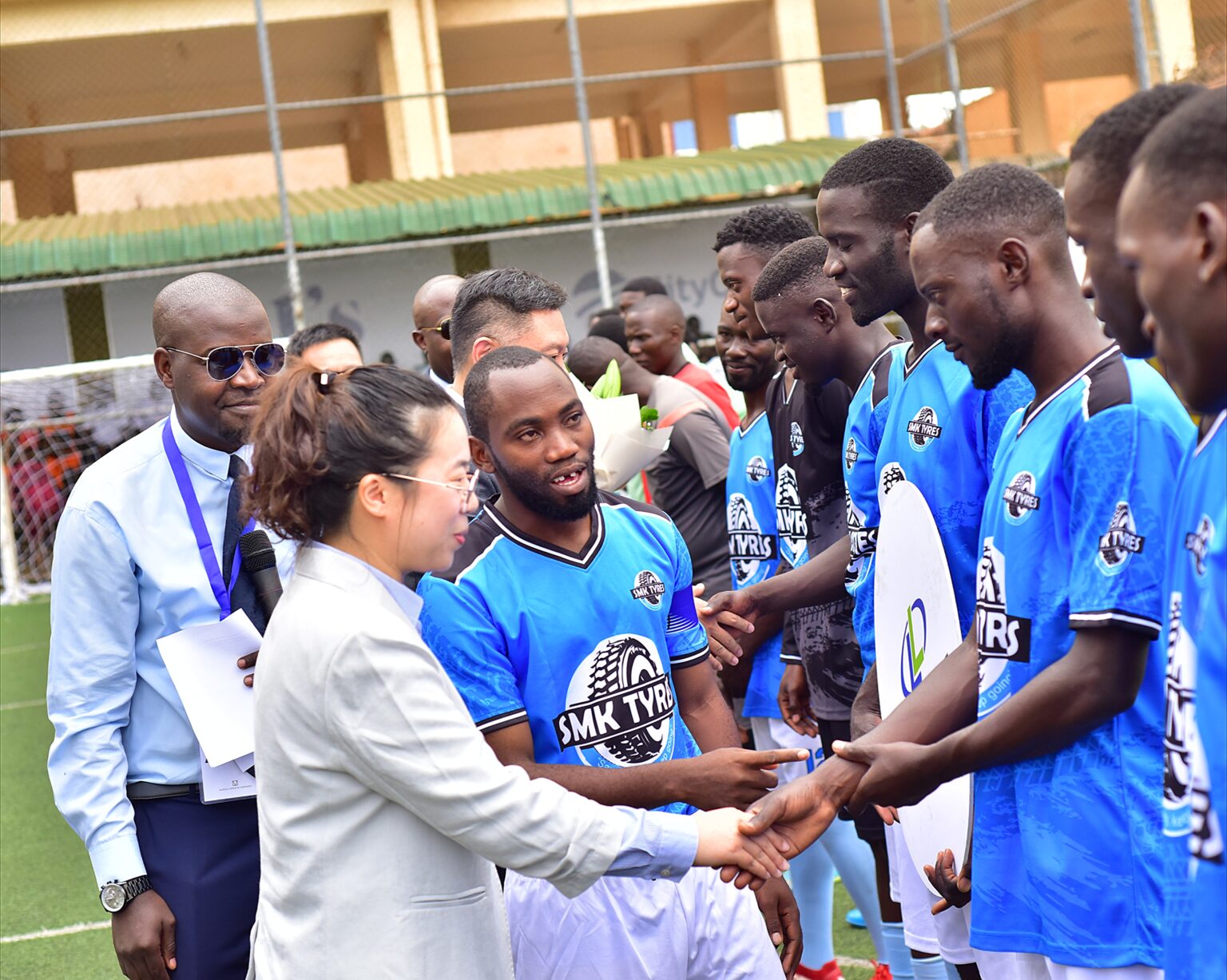
Wang also launched the inaugural Mandela Group Linglong Dealers’ Football Tournament at the Mandela Sports Arena. Nine dealer teams are participating in the competition, which is intended to become an annual event.
While the tournament is primarily a relationship-building initiative, the broader partnership demonstrates how commercial platforms can create space for conversations that extend beyond sales.
For Uganda, the EV promotion presents one such opportunity.
As the country faces rising urbanisation, increasing vehicle ownership and mounting pressure to address air pollution and climate change, the shift towards cleaner mobility will require participation from government, manufacturers, distributors, consumers and the energy sector.
Mandela Group and Linglong’s electric-vehicle promotion is therefore more than a raffle campaign.
It places an emerging clean-transport technology directly in the public conversation—and, potentially, on Uganda’s roads.