Uganda’s mounting waste crisis and accelerating deforestation could be addressed through one unconventional intervention: converting urban garbage into affordable fuel briquettes.
What currently threatens public health and the environment could, with the right investment, become a source of employment, clean energy and economic opportunity.
The idea is simple but potentially transformative: turn waste into fuel, reduce dependence on wood charcoal and create a commercial incentive to protect the country’s dwindling forests.
At the centre of this proposition is Kiteezi, Kampala’s infamous waste-disposal site, where years of accumulated garbage have come to symbolise the challenges of urban waste management.
Rather than viewing such sites merely as environmental liabilities, Kampala Capital City Authority (KCCA) could explore whether they can become hubs for waste recovery and alternative-fuel production.
The argument is compelling. Kampala generates enormous quantities of waste, ranging from food scraps and banana peels to discarded paper, sawdust and other organic materials.
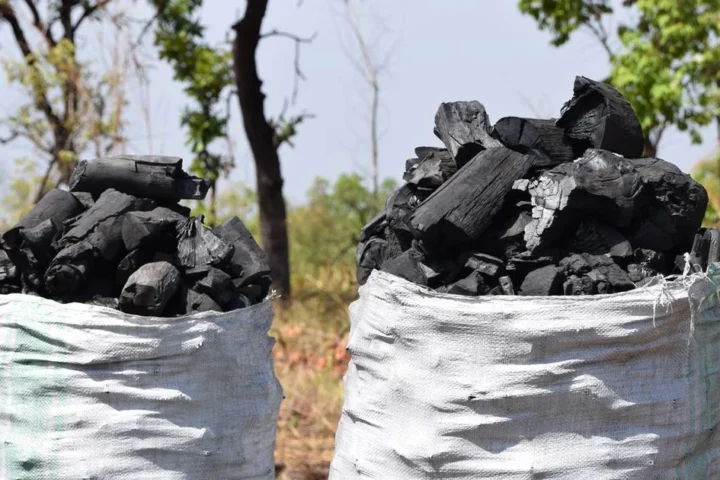
Meanwhile, communities across Uganda continue to depend heavily on wood charcoal for cooking, sustaining demand that contributes to pressure on forests.
What if the waste choking Kampala could help reduce the demand for the trees disappearing from Buddu, Singo, Mityana and beyond?
Turning rubbish into a marketable energy resource
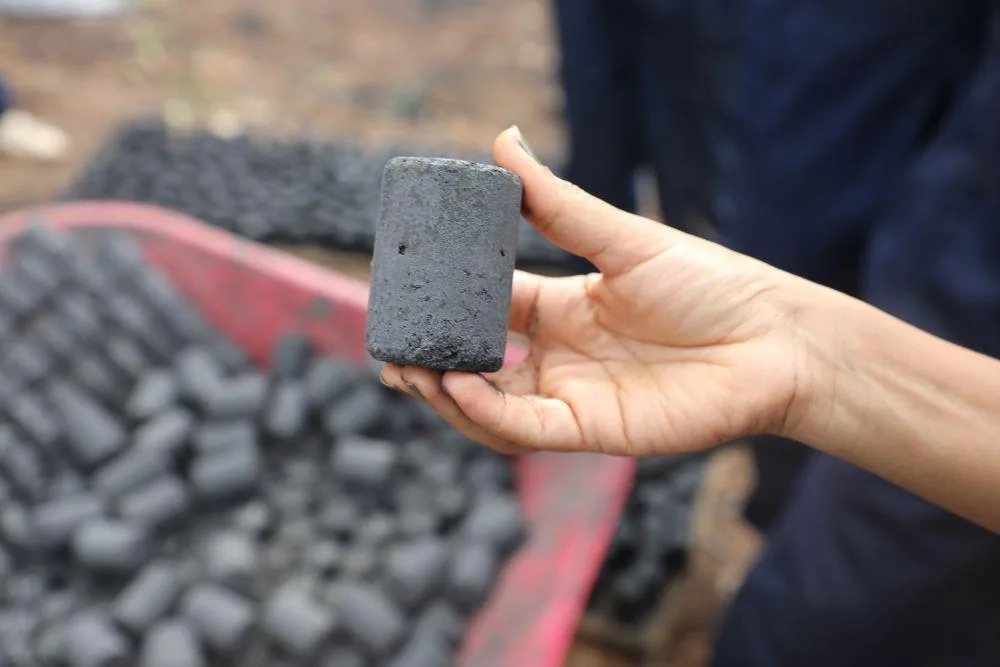
The proposed solution is the production of biomass briquettes from suitable waste materials.
Banana peels and other food residues, waste paper, sawdust and charcoal dust can potentially be processed into alternative fuels.
Depending on the feedstock and production method, the materials may require sorting, drying, carbonisation, grinding and compression, with a suitable binder added where necessary.
The resulting briquettes could provide an alternative to conventional wood charcoal for households, restaurants and other commercial users.
However, success would depend on more than the ability to manufacture them.
The briquettes would need to burn efficiently, remain affordable, produce acceptably low emissions and meet consistent quality standards.
Not all municipal waste is suitable for fuel production, and contaminated plastics or chemically treated materials would require strict exclusion.
With proper processing, quality control and market development, waste-derived briquettes could help turn a costly disposal problem into a productive economic activity.
A potential lifeline for Uganda’s forests
The environmental case for alternative cooking fuels is particularly significant in a country where wood fuel remains important to household energy consumption.
As demand for charcoal persists, trees are harvested to supply urban and rural markets.
Forest loss carries consequences beyond the disappearance of tree cover: it can contribute to soil degradation, disrupt watersheds, undermine biodiversity and increase pressure on agricultural landscapes.
The economic pressures are equally real. When charcoal becomes expensive, low-income households must stretch already limited budgets to meet their cooking needs.
Affordable briquettes made from responsibly sourced waste could offer an additional choice.
If households and businesses adopt them at scale, demand for conventional wood charcoal could decline, easing pressure on forests.
That outcome, however, is not automatic. Briquettes must compete on price, convenience, cooking performance and availability.
Their environmental benefits must also be assessed across the entire production chain, including the energy used for drying and processing.
The objective should not simply be to manufacture another fuel, but to develop an alternative that genuinely reduces dependence on unsustainably harvested wood.
KCCA could turn waste management into an employment engine
Rather than treating garbage collection exclusively as a sanitation responsibility, KCCA could explore an integrated waste-to-energy programme built around recovery, processing and commercial distribution.
A pilot facility serving the Kiteezi area could establish whether the model is technically and financially viable before additional facilities are considered in other parts of Kampala, potentially including Nakawa and Mpererwe.
Such a programme could create jobs across several stages of the value chain:
Waste sorting and the recovery of suitable organic materials.
Drying, grinding and preparation of biomass feedstock.
Briquette manufacturing, packaging and quality assurance.
Warehousing, transportation, marketing and retail distribution.
Youth groups, waste collectors, community enterprises and private investors could participate through structured partnerships, creating opportunities beyond conventional waste collection.
For young people seeking employment, the industry could provide practical work and technical skills.
For existing waste collectors, it could create opportunities to earn income from materials that would otherwise have little commercial value.
The scale of employment would depend on the technology, production capacity, market demand and investment model. Nevertheless, a properly designed initiative could connect environmental management directly to job creation.
The economic promise—and the need for realistic numbers
The commercial opportunity becomes clearer when production costs and selling prices are examined.
Consider a hypothetical operation producing 10,000 sacks of briquettes daily and selling each at UGX60,000. That would generate gross daily sales of UGX600 million.
But this figure is a revenue projection, not profit. It assumes that all 10,000 sacks can be produced, sold and distributed every day at the stated price.
The actual business would have to account for machinery, electricity, labour, transport, feedstock preparation, maintenance, packaging, taxes and other operating costs.
Before committing public funds, KCCA and prospective investors would need to establish whether the target production volume is achievable, whether consumers would accept the product and whether the selling price could compete with conventional charcoal.
A smaller pilot could answer these questions through measured results on production costs, fuel performance, customer uptake and the quantity of wood charcoal displaced.
If the model proves viable, expansion could follow. If the initial assumptions fail, the pilot would provide evidence for redesign before larger sums are invested.
Could carbon finance strengthen the business case?
There may also be opportunities to attract climate finance or generate revenue through carbon-credit programmes.
Projects that demonstrate verified reductions in greenhouse-gas emissions may qualify for carbon-credit mechanisms, depending on the applicable methodology, eligibility requirements and independent verification.
A waste-to-briquette initiative would need to demonstrate genuine emissions reductions against an accepted baseline.
Simply producing briquettes does not automatically entitle an operator to carbon credits, nor does every tonne of alternative fuel qualify for a fixed payment.
Nevertheless, carbon finance could become an additional revenue stream if a project meets the necessary standards.
It could help strengthen the business case while supporting investment in waste recovery and cleaner household energy.
Learning from regional and international experience
Uganda would not be exploring an entirely new concept.
Biomass briquettes and other waste-to-fuel technologies have been developed in several countries, including across Africa and Asia.
The relevant lesson is not that another country has adopted the technology, but that successful implementation requires a functioning supply chain, appropriate equipment, reliable feedstock, quality control and a market willing to purchase the final product.
KCCA could assess existing projects to identify technologies suitable for Kampala’s waste composition and household cooking practices.
Partnerships with universities, technical institutions, environmental organisations and private manufacturers could help establish the most effective approach.
The authority would also need to consider whether the proposed facilities could operate safely, comply with environmental standards and avoid transferring pollution from landfills into homes or production sites.
A practical starting point for Kampala
The next step need not be a costly citywide rollout. It could begin with a carefully designed demonstration project.
KCCA could commission a feasibility study, characterise the available waste, identify suitable feedstock and assess the technical and financial requirements for a pilot briquette plant.
The project would then test production methods, cooking performance, emissions, consumer acceptance and the potential reduction in conventional charcoal use.
Clear performance indicators would help determine whether expansion is justified.
These should include the cost per sack, sales volumes, jobs created, waste diverted from disposal sites and independently assessed environmental benefits.
The authority could also explore partnerships with private-sector operators, development agencies and research institutions to share costs and technical expertise.
Such a programme would not eliminate Kampala’s waste-management challenges overnight, nor would briquettes alone reverse Uganda’s deforestation. But it could form part of a broader strategy linking waste reduction, alternative energy, forest conservation and urban employment.
Reimagining Kiteezi
Kiteezi has become a powerful reminder of the consequences of failing to manage urban waste effectively. Yet its future need not be defined exclusively by the garbage accumulating there.
With appropriate investment, waste recovery could become part of a circular economy in which discarded materials are converted into useful products, jobs and commercial value.
The larger opportunity is to connect two national challenges—urban waste and unsustainable dependence on wood fuel—through a practical, measurable intervention.
Uganda does not need to romanticise garbage or promise that every discarded material can become fuel.
It needs to identify what can be safely recovered, develop products that consumers genuinely want and establish business models that deliver verifiable environmental and economic benefits.
The central question for KCCA is no longer simply how Kampala can dispose of its waste, but how much of that waste can be recovered to create value.
If the economics, technology and environmental safeguards stand up to scrutiny, garbage briquettes could help make Kiteezi part of the solution—supporting cleaner neighbourhoods, new employment opportunities and reduced pressure on Uganda’s forests.