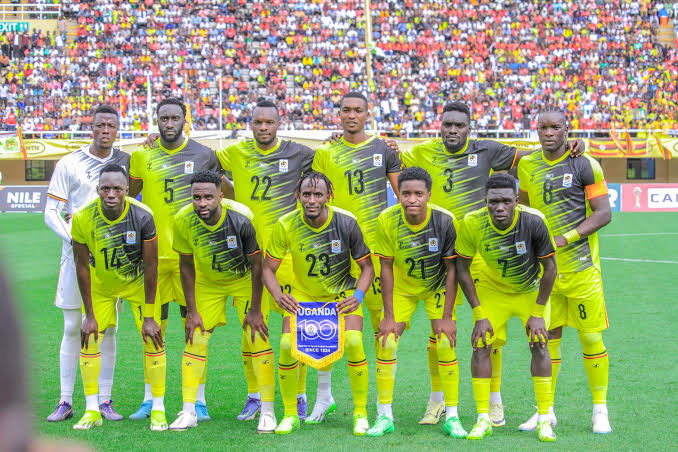
Uganda’s road to the 2027 Africa Cup of Nations has taken shape, with the Cranes drawn into a challenging Group H alongside Tunisia, Libya and Botswana.
While Uganda have already secured automatic qualification as co-hosts of the tournament, the qualifying campaign will serve as a critical testing ground rather than a pathway to the finals.
Only one team from the group—excluding the hosts—will secure qualification, adding a competitive edge for the visitors.
For head coach Paul Put, the fixtures present far more than routine assignments. They offer a structured platform to evaluate his squad depth, integrate emerging talent and refine tactical cohesion ahead of the continental showpiece on home soil.
The draw pits Uganda against seasoned North African giants Tunisia, one of the continent’s most consistent performers, as well as a steadily improving Libya side and a Botswana team that has shown notable progress in recent years.
Collectively, the group provides a balanced yet demanding measure of the Cranes’ readiness.
The qualification matches will be staged across three FIFA international windows between September 2026 and March 2027, ensuring sustained competitive action in the build-up to the finals.
Beyond the pitch, preparations for the tournament are accelerating. Renovation works at Mandela National Stadium are ongoing, while construction of the Hoima City Stadium continues to gather momentum as part of Uganda’s broader infrastructure commitments.
The 2027 Africa Cup of Nations—branded AFCON Pamoja—will run from 19 June to 17 July 2027. It will mark a historic milestone as the first edition of the tournament to be jointly hosted by three nations: Uganda, Kenya and Tanzania.
For the Cranes, the journey to AFCON 2027 is less about qualification and more about calibration—fine-tuning a team poised to carry the weight of national expectation on one of African football’s grandest stages.