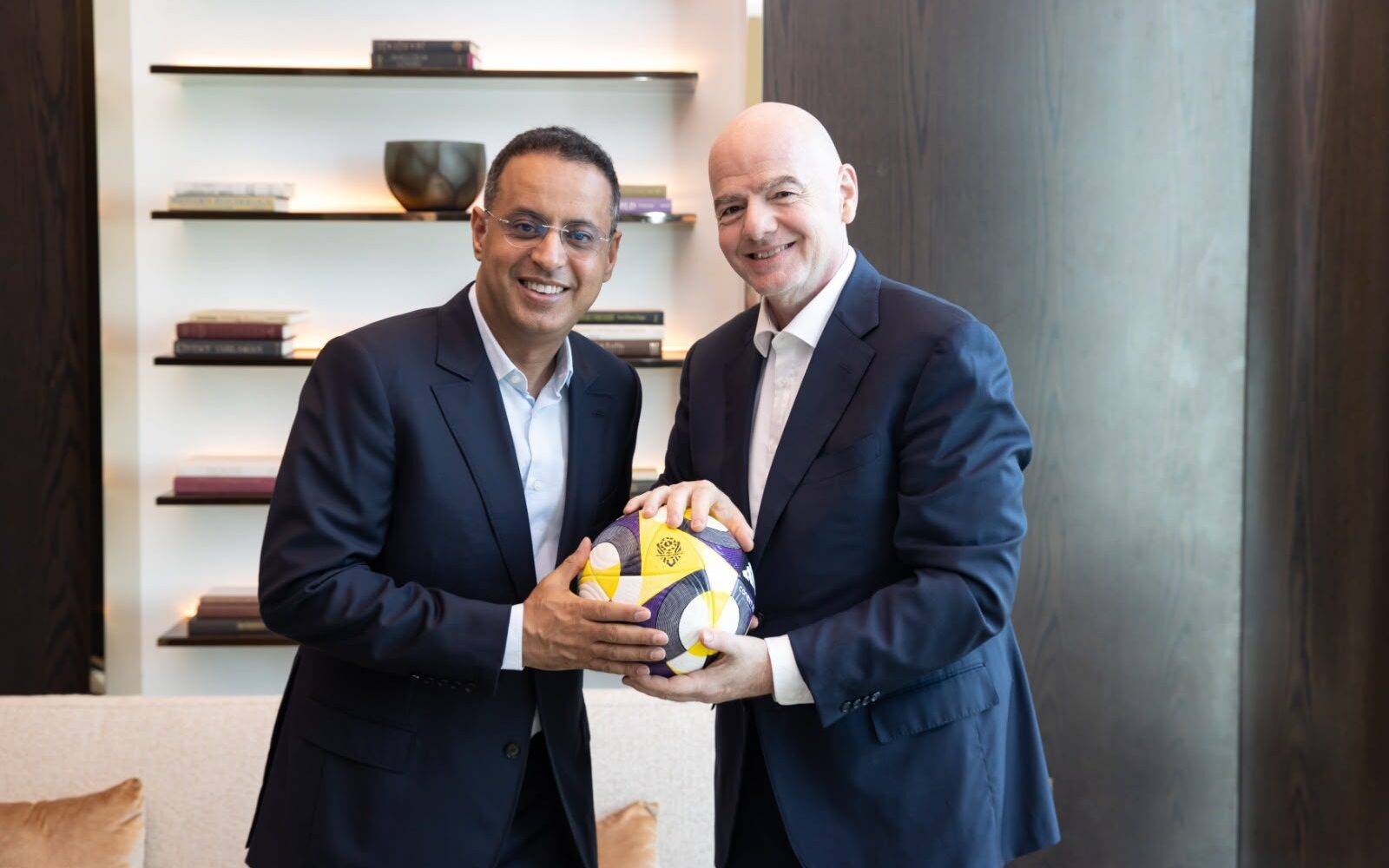
FIFA Council member Ahmed Yahya has thrown his weight behind Gianni Infantino’s continued leadership of world football, insisting that the FIFA president remains the right person to drive the game’s global development.
Yahya, who also serves as president of the Mauritanian Football Federation, made the remarks while addressing the media in Zurich on Thursday, October 15, 2026, following discussions within FIFA over governance, financial distribution and proposed reforms.
“The majority want Gianni Infantino to stay,” Yahya declared, expressing confidence in the Swiss administrator’s leadership and his commitment to expanding football’s reach, particularly in developing regions.
The Mauritanian football chief argued that Infantino’s leadership has delivered tangible benefits, pointing to the expansion of the FIFA World Cup from 32 to 48 teams as a major step towards making the global game more inclusive.
He said the decision, which initially faced opposition from some quarters, had proved vital for world football by creating greater opportunities for countries to compete on the biggest stage.
Yahya also defended FIFA’s financial support programmes, revealing that a proposal had been presented to allocate USD 25 million to each member association over four years.
According to Yahya, the proposed funding represents a significant increase compared with the resources available to associations a decade ago and could help improve football infrastructure and grassroots development.
“These financial resources can enable young people today to play football on grass pitches rather than on stony or gravel-covered pitches, and that is precisely what matters,” he said.
Coming from Africa, Yahya maintained that the benefits of FIFA’s development agenda were particularly important for countries seeking to improve facilities, widen participation and strengthen football at the grassroots level.
He argued that equal financial allocations and voting rights for all member associations remain central to FIFA’s development model, warning that alternative arrangements could favour wealthier nations at the expense of less financially endowed football associations.
“For us, equality is what defines FIFA today: that all countries are equal.
When we go to the FIFA Congress, everyone has an equal vote, just as funding is the same for all countries around the world,” Yahya said.
He maintained that FIFA’s existing system offers a more balanced approach to global football development by ensuring that smaller associations retain an equal voice in the organisation’s decision-making structures.
On governance reforms, Yahya acknowledged calls, particularly from some European football stakeholders, for changes within FIFA.
However, he insisted that any reform process should extend beyond the global governing body to include national associations and continental confederations.
He said Infantino and the FIFA Council were open to reforms aimed at improving transparency, democratic governance and the overall management of football.
Yahya’s comments followed discussions surrounding a proposal that was eventually withdrawn by Infantino. According to the Mauritanian official, the FIFA president subsequently apologised to members of the organisation’s executive leadership, paving the way for a more constructive debate.
Yahya said the issue was subsequently set aside as FIFA’s leadership focused on solutions intended to advance the sport.
He nevertheless stressed that football development must go hand in hand with ethical standards and strict adherence to FIFA’s statutes and regulations.
Despite the debate over governance and reform, Yahya remained unequivocal in his assessment of Infantino’s leadership, arguing that his continued presidency would provide the right direction for world football.
“I am certain that Gianni Infantino is the right president,” he said.