By Joseph Mbazzi Muguluma (Immanuel Ben Misagga)
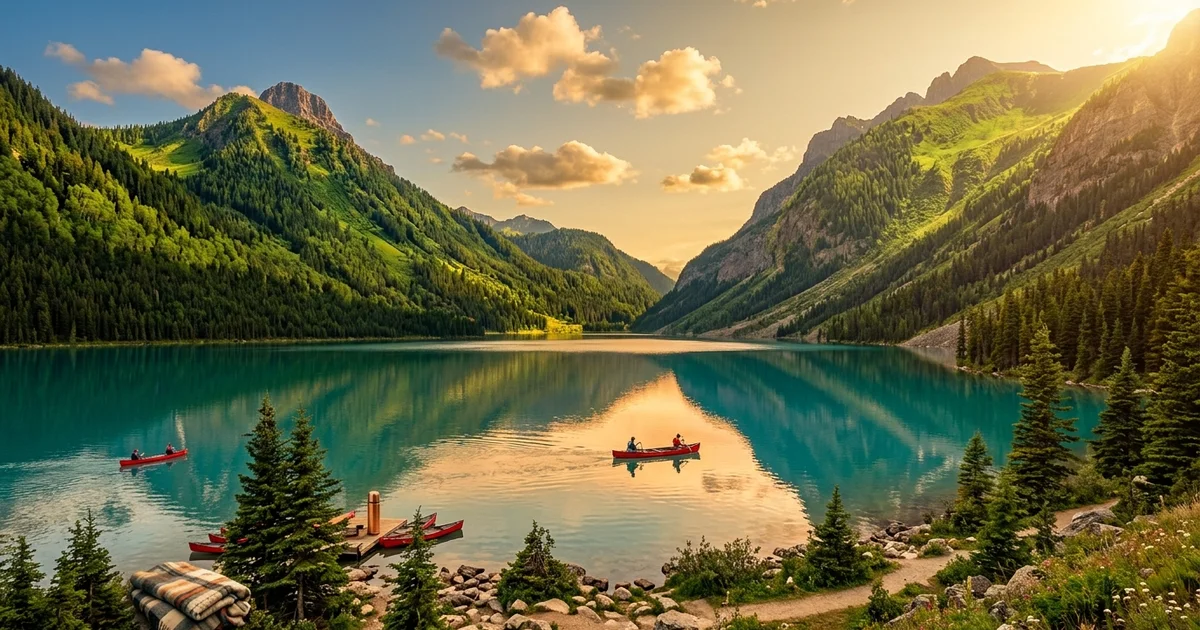
There is a lake every man knows.
You may call it by different names. You may have crossed its shores in different countries, worshipped beside it, feared it, loved it or pretended it did not exist. But every man, at some point in his life, finds himself standing before this lake.
It lies between two soft mountains, beautiful enough to make the mouth dry.
Every river flows into it, yet it never fills.
Pour more water into it and the lake simply whispers: more.
This is the Lake of Desire.
It has existed longer than memory, and its waters have claimed kings, warriors, artists, lovers and ordinary men. It has no passport and recognises no border.
Adam had an entire Eden behind him, yet even paradise could not protect him from its shores.
Samson, the strongest man of his generation, approached it with the strength of a lion. His locks were not merely cut with scissors; his power was surrendered at the water’s edge.
Delilah was the shoreline.
King David, too, discovered that even a throne does not place a man beyond the reach of the Lake. Bathsheba became the water he could not stop looking at, and Uriah became one of its casualties.
The Lake has always been patient.
It waits for kings and commoners alike.
It swallowed General James Kazini in Kampala, despite the stars on his shoulders and the power that came with them. It took rally driver Kiddu in Kansanga. Makindye has watched many rivers make their way towards the same destination.
It took Philly Bongole Lutaaya, the great Ugandan voice whose music could make an entire continent dance and grieve almost simultaneously.
It took Lucky Dube before he could reach the shore.
And beyond Uganda, the Lake continues its work.
Shakespeare found it in the tragic world of Romeo and Juliet, where love itself became trapped between two hostile mountains.
Ngũgĩ wa Thiong’o understood its appetite too. In I Will Marry When I Want, the human struggle for love, wealth, class and dignity circles the same ancient waters: desire that promises freedom but often demands a price.
Even the most powerful men discover that the Lake cannot be owned.
R. Kelly built rivers of music that flowed across the world, but eventually the waters around him became prison walls.
Sani Abacha, surrounded by power and wealth, could not command the Lake to release him.
And history keeps returning to the same lesson: the Lake rewards those who respect it and destroys those who believe they possess it.
Even Jesus encountered its shores.
When a crowd wanted to stone the woman accused of adultery, He did not ask whether she had been thirsty. He simply asked the crowd to examine their own lips before throwing stones.
One by one, they left.
Because every human being has drunk from this Lake.
Some drink from ambition.
Others from lust, money, fame, power, recognition or forbidden love.
Some drink only once.
Others return every morning.
And some become convinced that they can drink the entire Lake dry.
They never can.
THE STRANGE SCIENCE OF DESIRE
The elders would probably explain it differently.
They might tell you that two mountains create a valley, and the valley creates pressure. That pressure pulls every river towards the same basin.
Scientists might call it physics.
The elders call it desire.
The chemistry is even stranger.
One sip changes the blood.
It alters the eyes. It changes the tongue. It rearranges priorities.
A man can forget the things he once considered sacred.
Salt keeps him thirsty.
Honey keeps him returning.
And somewhere above those two mountains, the cupids keep flying.
Perhaps that is why some men survive the Lake while others do not.
Jacob wrestled at Peniel and survived.
David survived Bathsheba, but not without consequences.
Solomon welcomed the Queen of Sheba and survived the encounter, but his kingdom would later be divided.
Others entered the same waters and never returned.
That is why the drowning of a man should not automatically be interpreted as weakness.
Some battles are larger than the swimmer.
Some waters are deeper than the man imagined.
Some nights, the mountains align perfectly, the pressure rises, the chemistry becomes overwhelming — and the swimmer does not make it back.
Philly did not return that year.
Kazini did not return that night.
Lucky Dube did not reach his shore.
Their stories remind the living that survival is not always proof of superior strength.
Sometimes, it is simply another morning granted by God.
THE MEN WHO THINK THEY CAN OWN THE WATER
Manyiganjegere Moises understood something about the Lake.
He swam.
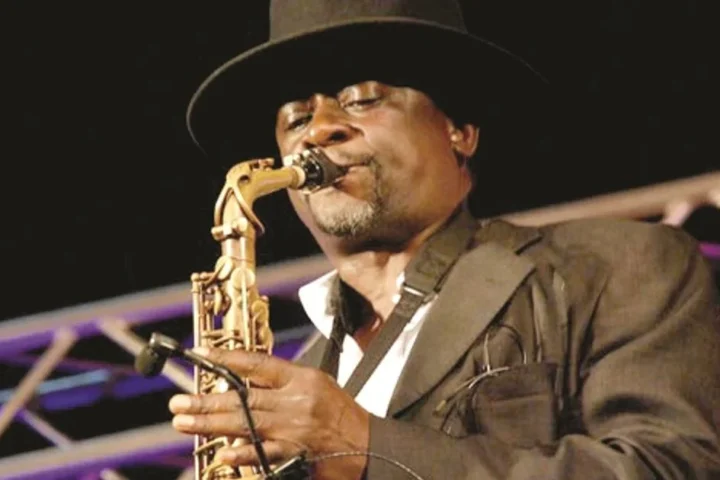
He played saxophone beside it.
He made music around waters that had swallowed others.
Leopards could disappear. Foxes and rhinos could sleep beneath the surface. Yet Moises kept returning to the shore.
Then came the engineers with their mix designs and crushing-value calculations.
But whose mix is perfect?
The Lake does not care about our certificates.
It does not respect our titles.
It does not ask whether you are a general, king, musician, businessman, journalist or farmer.
At the shoreline, everybody is simply a man.
That is the Lake’s greatest lesson.
HOW TO LIVE BESIDE THE LAKE
Do not try to own it.
Do not fight the hyenas at its shore.
Do not believe that because you survived yesterday’s swim, you are immortal.
If you must approach the water, carry music.
That is why the monument to a man like Moises should carry a saxophone rather than celebrate the Lake itself.
Let the music speak when the water becomes restless.
Let the mountains remain beautiful.
Let the rivers flow.
Let the young amphibians believe they can drink the whole thing.
They will learn.
Because the Lake has no shortage of water, and humanity has no shortage of thirst.
There is a Lake every man knows.
It sits between two mountains.
Every river flows into it.
It never fills.
And perhaps the oldest law written on its shores is the simplest:
River pours. Lake receives. Desire remains. Survival is God’s permission.
So drink carefully.
Respect the water.
And when God tells you that your swim is over for the day, climb back to your mountain.
Come home.
Let the wind bring you the saxophone.