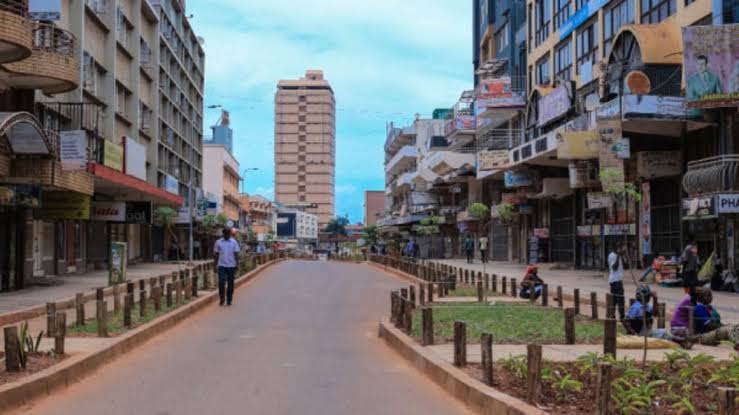
For years, Kampala’s streets have carried the unmistakable symptoms of a city growing faster than its systems: congested roads, improvised markets, crowded pavements, disorganized boda boda stages and businesses spilling into spaces meant for pedestrians.
Then, almost suddenly, the city changed.
Within a week, roadside vendors were cleared from several streets, pathways were opened up and national cleaning activities introduced a new civic ritual, with communities expected to participate every last Saturday of the month.
I did not see this coming. Yet, perhaps, this is precisely the ritual Uganda has needed for years.
Credit must go to Prime Minister Robinah Nabbanja for mobilising the country around the initiative. But if this programme is to become a lasting culture rather than another enforcement campaign, persuasion must eventually carry more weight than coercion.
There is something Uganda can learn from Bulungi Bwansi in Buganda. Whatever political undertones may surround it, the tradition survives because it creates a sense of collective ownership. People participate because they feel that maintaining their community is partly their responsibility.
A deliberate dialogue between government and the Katikkiro of Buganda could therefore add an important cultural dimension to the national cleaning programme.
Cleaning the streets is only half the job
In Kampala, the removal of roadside kiosks and vendors has undeniably opened up spaces that had gradually become extensions of the marketplace.
A pavement should serve pedestrians. A road should serve traffic. A drainage channel should carry water.
When every available public space becomes a trading point, the city eventually stops functioning as a city.
The KCCA operation, therefore, can be understood as urban surgery rather than an attack on livelihoods.
But surgery must also be followed by treatment.
You cannot remove someone’s means of survival and then simply walk away.
That is where the conversation becomes more complicated.
The young man who previously stood by the roadside from 5 a.m. until 11 p.m. selling chapatti, rolex or other food items was not necessarily a criminal. He was working.
Remove the work without creating another pathway to income and you create an economic vacuum.
Idle hands, empty stomachs and frustration can become fertile ground for crime.
The consequences extend beyond the vendor himself. Producers of flour, cooking oil, eggs, vegetables and other chapatti-related inputs depend on that informal economy. Consumers also depend on its affordability and convenience.
In other words, we have cleaned the streets, but we must not forget the stomach.
Kampala needs regulation, not permanent confrontation
The answer is not to restore the chaos that existed before the clean-up.
Neither should Kampala attempt to eliminate the informal economy that sustains thousands of families.
The answer is regulation.
Take boda bodas.
The sector is indispensable to Kampala, but it also illustrates what happens when a vital service grows without sufficiently strong systems.
There is a need for properly designated operating zones, rider identification, training, working-hour regulations and enforceable safety standards.
One rider. One registered motorcycle. Digital identification. GPS-enabled tracking.
The objective should not be to destroy the boda boda economy, but to make it part of an orderly urban transport system.
Kigali offers one example of what more disciplined regulation can look like. Kampala does not have to copy Rwanda wholesale, but it can study what works and adapt it to Ugandan realities.
Build markets instead of chasing markets
Uganda’s entrepreneurial culture is one of the country’s greatest economic assets. The informal trader, food vendor and small-scale entrepreneur are not merely obstacles to urban development; they are participants in the economy.
So why not design the city around that reality?
Every parish could have a properly planned market or food zone.
Ntinda could have a structured Matoke Marché. Nakawa could have a Roast & Go Hub.
Give traders designated stalls, sanitation, electricity, drainage, waste collection, operating hours and clear regulations.
Instead of asking whether street food should exist, the better question is:
Where should it exist, and under what conditions?
You do not kill street food. You house it.
You do not destroy entrepreneurship. You organise it.
Kampala also needs a stronger command structure
The city cannot be governed through occasional campaigns.
It needs consistent planning, enforcement and accountability.
Kampala has an elected Lord Mayor, but the wider institutional structure must give the city leadership sufficient authority and clarity to plan, execute and answer for urban development.
London and New York demonstrate different models of metropolitan governance, but they share one important principle: major cities require institutions capable of making decisions and enforcing urban standards.
Kampala cannot continue operating through scattered directives while its roads, drainage systems, pedestrian spaces, markets and transport corridors develop independently of one another.
We need corridors, not chaos.
We need pedestrian walkways that pedestrians can actually use.
We need boda boda stages that are genuinely designated and enforced.
We need roads designed for movement rather than permanent improvisation.
And we need traffic enforcement that means something.
Today, it is not unusual to encounter vehicles fitted with bull bars that look more like armour than accessories. Lane discipline is routinely compromised. Traffic often appears to move according to instinct rather than predictable rules.
In such an environment, drivers learn to look everywhere because the road itself offers no guarantee of order.
The Musisi question
Many Kampala residents will inevitably compare the present city with the period when Jennifer Musisi served as KCCA Executive Director.
Whatever one’s assessment of that era, her tenure became associated in public debate with a stronger enforcement culture and a more assertive approach to urban management.
The larger lesson is not necessarily about one individual.
It is about institutional authority.
Kampala needs a city administration that can plan beyond political cycles, enforce consistently and coordinate the many agencies responsible for making the capital function.
The next phase must be economic
The cleaning campaign should not end with cleaner pavements.
That should be only phase one.
Phase two must be about building a city in which the people removed from the streets have somewhere legitimate to go.
Let us create organised markets.
Let us regulate boda bodas.
Let us formalise informal businesses without suffocating them.
Let us construct pedestrian corridors.
Let us strengthen waste management.
Let us restore discipline to traffic.
Let us make public spaces genuinely public.
We do not lack people.
We do not lack entrepreneurs.
We do not even necessarily lack money.
What Kampala desperately lacks is a coherent urban system.
As my oracles of Kifuuta in Kyotera, Buddu, say: “Omuntu atalina ntegeka, ensi emutega” — loosely translated, a person without a plan is trapped by the world.
The same is true of a city.
A city without order eventually becomes trapped by its own chaos.
Kampala has taken the first step by cleaning its streets.
Now it must take the harder step: designing a city where cleanliness, commerce, mobility and human dignity can coexist.
The goal should not simply be a Kampala without roadside vendors.
It should be a Kampala with proper marketplaces, functioning roads, usable pavements, regulated transport and economic opportunities for the people who keep the city alive.
We should stop celebrating survival and start designing for prosperity — moving Kampala from the roadside to the marketplace, and from organised chaos to designed order.