By Joseph Mbazzi Muguluma
Young people, not every destiny arrives early. Some journeys take decades to unfold, testing patience, building character and preparing a person for a responsibility that cannot be understood in a single day.
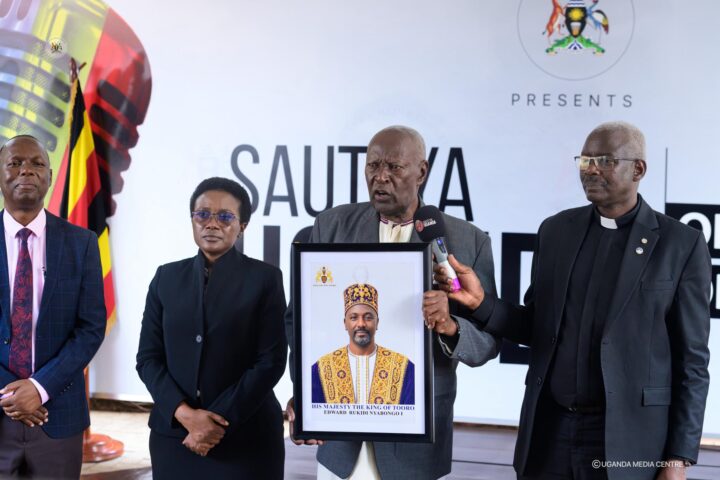
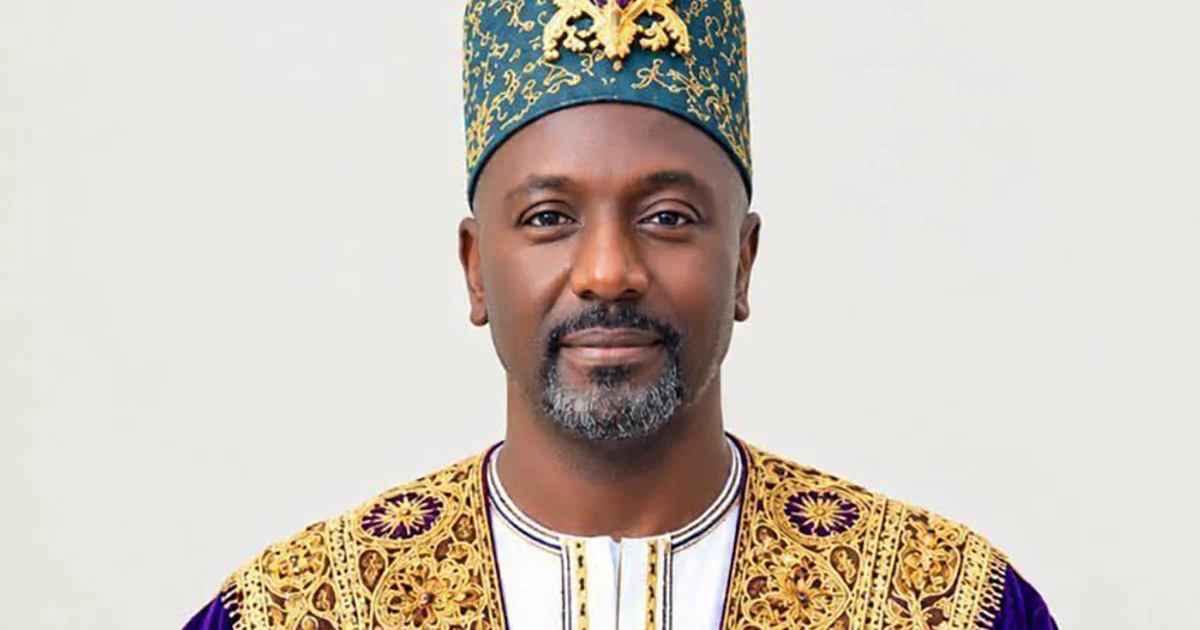
The story of His Majesty Edward Rukidi Nyabongo I, presented through the lens of destiny, tradition and perseverance, offers a compelling reflection on that journey.
Born Edward Rukidi Kijanangoma in 1970, he is a grandson of Omukama Sir George David Matthew Kamurasi Rukidi III. Royal lineage connected him to the history of Tooro, but his path to the throne was not simply a matter of birth. It was also a story of working, learning and living beyond the walls of a palace.
For decades, he experienced life outside the traditional privileges associated with royalty. His professional journey took him into broadcasting, including work at Uganda Broadcasting Corporation (UBC), where deadlines, editorial decisions and the demands of journalism formed part of his daily routine.
He also spent time in Rwanda, where he interviewed people and pursued his professional responsibilities. Away from the royal court, he encountered the ordinary pressures of earning a living, building relationships and navigating the uncertainties that accompany adult life.
That contrast gives his story its central theme: a royal heritage does not necessarily exempt its bearer from the ordinary struggles of life.
The newsroom before the royal court
There is a striking image in the journey from journalism to kingship: a man accustomed to working behind a microphone and within a newsroom eventually assuming the responsibilities of a traditional monarch.
In the newsroom, the work revolves around gathering information, verifying facts, meeting deadlines and bringing stories to the public. In a kingdom, leadership carries a different set of expectations, rooted in cultural identity, historical continuity and the welfare of the people.
The two roles are distinct, but both place demands on the person entrusted with responsibility.
His years in professional life can therefore be viewed as part of a wider journey of experience. They illustrate how a person’s history is not defined exclusively by the position they eventually occupy, but also by the experiences accumulated along the way.
Royal birth may establish a historical connection. The years that follow shape the human story behind it.
September 2026: A defining chapter
According to the account of his accession, the Babiito Royal Clan selected Edward Rukidi Nyabongo I on 9 September 2026, before his coronation at Karuziika Palace on 29 September 2026.
These dates marked a defining chapter in his life, bringing his family heritage and the institution of the Tooro monarchy into the centre of his public identity.
The transition from an established professional life to the throne represents more than a change of title. It brings expectations of cultural stewardship, continuity and service to the kingdom.
The significance of such a transition is best understood within Tooro’s own history and traditions, where the monarchy remains an important expression of collective identity.
For those who interpret life through faith, the moment may also carry a spiritual meaning: that the experiences of earlier years can acquire a new significance when viewed in the light of later events.
When tradition meets faith
The story also raises a question that resonates beyond the kingdom: how should people understand the relationship between cultural heritage and religious faith?
For some, the answer lies in seeing no necessary contradiction between respecting ancestral customs and trusting in God. Tradition can provide a connection to family, community and history, while faith offers a framework through which people interpret their experiences and hopes.
The biblical Book of Tobit provides one such reflection. Through the intertwined journeys of Tobit, his son Tobias and the angel Raphael, the narrative explores faith, guidance and the possibility that the meaning of events may not be immediately apparent.
Applied as a metaphor rather than a direct equivalence, the story offers a reminder that people do not always recognise the significance of their circumstances while they are living through them.
The same principle can be applied to years spent working, learning and overcoming uncertainty. What appears ordinary at one stage of life may later become part of a much larger personal narrative.
A lesson for those who feel left behind
Perhaps the most enduring message of Edward Rukidi Nyabongo I’s journey lies not in the crown itself, but in the question it poses to anyone who believes their opportunity has passed.
At 30, 40 or 50, it is easy to measure personal progress against the achievements of others. Careers may stall, plans may take longer than expected, and responsibilities may arrive before opportunities do.
Yet a delayed outcome does not automatically mean a wasted life.
The years spent working, developing relationships, acquiring knowledge and meeting life’s obligations can still have value, regardless of whether they lead to public recognition or a dramatic change in circumstances.
This is where the metaphor of luck becomes particularly powerful. Luck need not be understood as a mysterious force that guarantees wealth or success. It can also represent opportunity, preparation, perseverance and the ability to recognise a new chapter when it arrives.
The lesson is not that everyone will eventually become a monarch or experience sudden fortune. It is that a person’s worth cannot be reduced to how quickly they achieve their ambitions.
From the microphone to the royal drum
Edward Rukidi Nyabongo I’s journey, as recounted through his professional background and accession, brings together two very different worlds: modern broadcasting and traditional kingship.
One is shaped by the urgency of the daily news cycle. The other is anchored in an institution whose identity reaches across generations.
Between them lies a story about heritage, work, patience and the responsibilities that accompany opportunity.
In the language of the Buddu proverb offered in this account, omukisa oguzaalibwa nagwo tegufa — the luck one is born with does not die.
It is a poetic expression of hope, not a guarantee that life will unfold according to a predetermined timetable. Its value lies in encouraging people to continue living purposefully, even when their ambitions remain unrealised.
So, young people, do not confuse a slow journey with a failed one. Keep learning. Keep working. Honour your roots, respect your community and remain open to possibilities you cannot yet see.
From the newsroom to Karuziika Palace, the message is simple: a person’s journey is bigger than any single chapter, and no chapter should be mistaken for the whole story.
Omukisa mpewo.