By Joseph Mbazzi Muguluma (Immanuel Ben Misagga)
For almost a century, the story of my family has been one of movement, curiosity and discovery.
In 1927, my Jjajja Muguluma travelled to Europe at a time when international travel was a completely different undertaking.
There were no commercial flights, no online bookings and no visa lotteries. His journey began in Kifuuta, took him through Mombasa and Suez, then onward to Marseille and London.
It took him six months to reach Europe and another six months to return.
One entire year of travelling simply to see the world.
As a boy, I sat at his feet and listened to those stories. And I often wondered: if my grandfather could travel that far in 1927 without an aeroplane, what excuse would I have?
That question shaped my own journey.
I have since travelled to more than 56 countries, largely by myself. Not merely as a tourist collecting photographs, but as a student of cities, cultures, architecture and human civilisation.
Everywhere I went, cities told me something about the people who built them.
And eventually, one question followed me home:
What does Kampala say about Uganda?
The answer, increasingly, is uncomfortable.
A CITY MUST HAVE A FACE
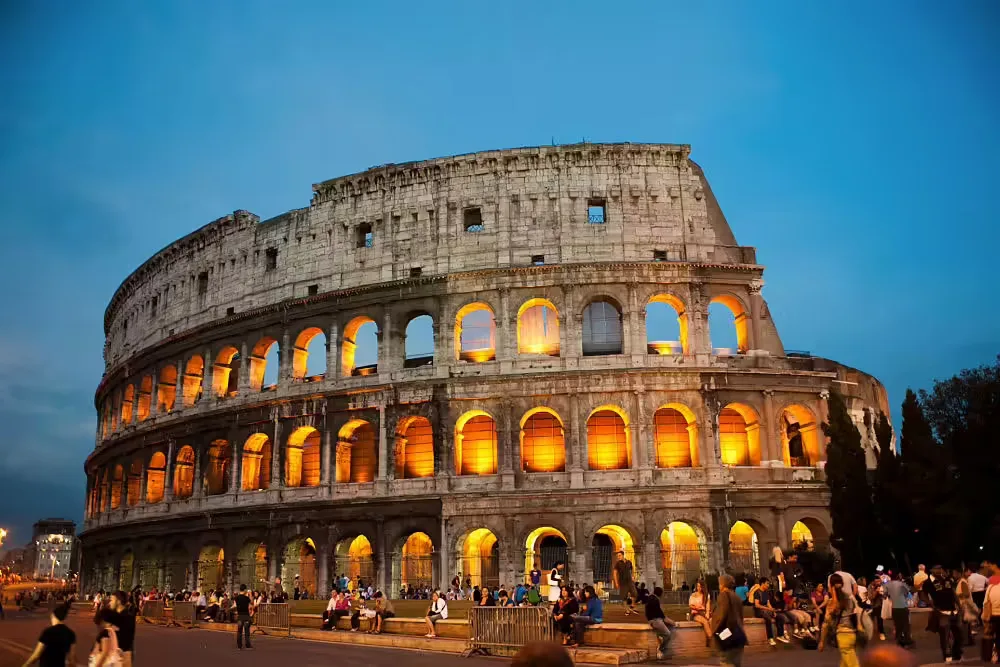
Rome does not need a sign saying, Welcome to Rome.
Its arches, columns, domes, roads and ancient structures announce it.
When I visited Rome, I saw a city that had retained a powerful architectural memory. Its ancient and modern layers speak to one another. The city has a visual vocabulary.
I experienced the same phenomenon in Moscow and parts of Eastern Europe. Monumental structures communicate history, political ideas and national memory.
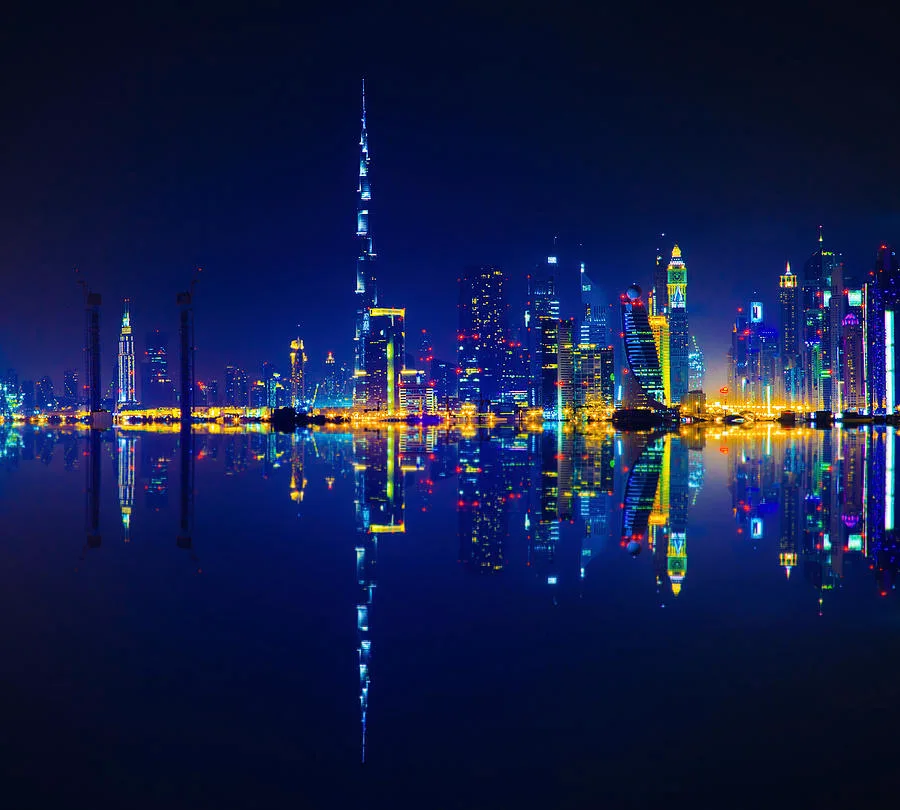
In Istanbul, Doha, Dubai and Abu Dhabi, modernity does not necessarily mean abandoning cultural identity. Contemporary buildings can still carry Islamic, Arab and regional influences.
In Beijing, Shanghai, Tokyo and Seoul, tradition remains visible even amid extraordinary modernisation.
The lesson is not that Uganda should copy Rome, China or the Gulf.
The lesson is that Uganda needs to discover its own architectural language.
WHERE IS UGANDA’S DRAGON?
China has the dragon.
Uganda has something equally powerful in its cultural imagination: the Ankole long-horn.
Why should our architectural identity not explore that form?
The long-horn curves upward with elegance and authority. It could inspire rooflines, arches, entrances, public spaces and monumental structures without producing literal copies of cattle horns.
Our architectural language could also draw from Buganda courtyards, Acholi forms, Busoga verandas and other indigenous traditions.
The objective should not be nostalgia.
It should be modern architecture rooted in Ugandan ideas.
WE ARE SURROUNDED BY MATERIALS WE BARELY USE
This becomes even more striking when one considers Uganda’s natural materials.
Moroto has marble.
Kisoro has volcanic stone.
Kasese has limestone.
Uganda has clay, bamboo and extensive timber resources.
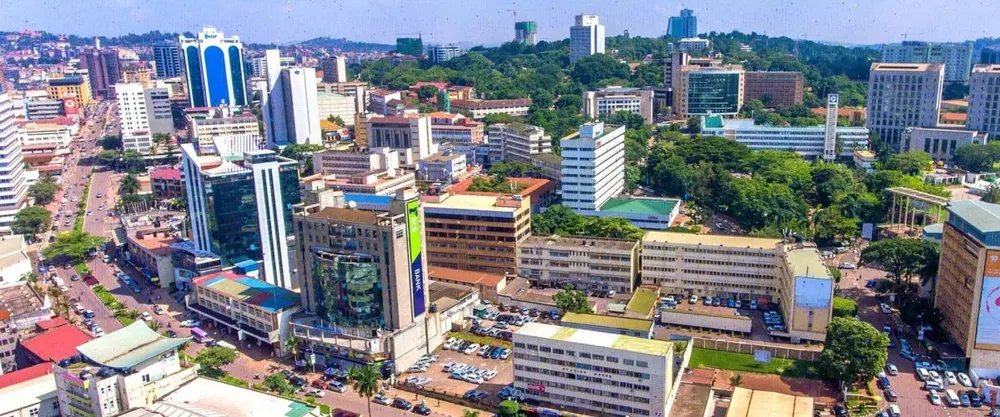
Yet too many of our new buildings appear as interchangeable glass, concrete and steel boxes.
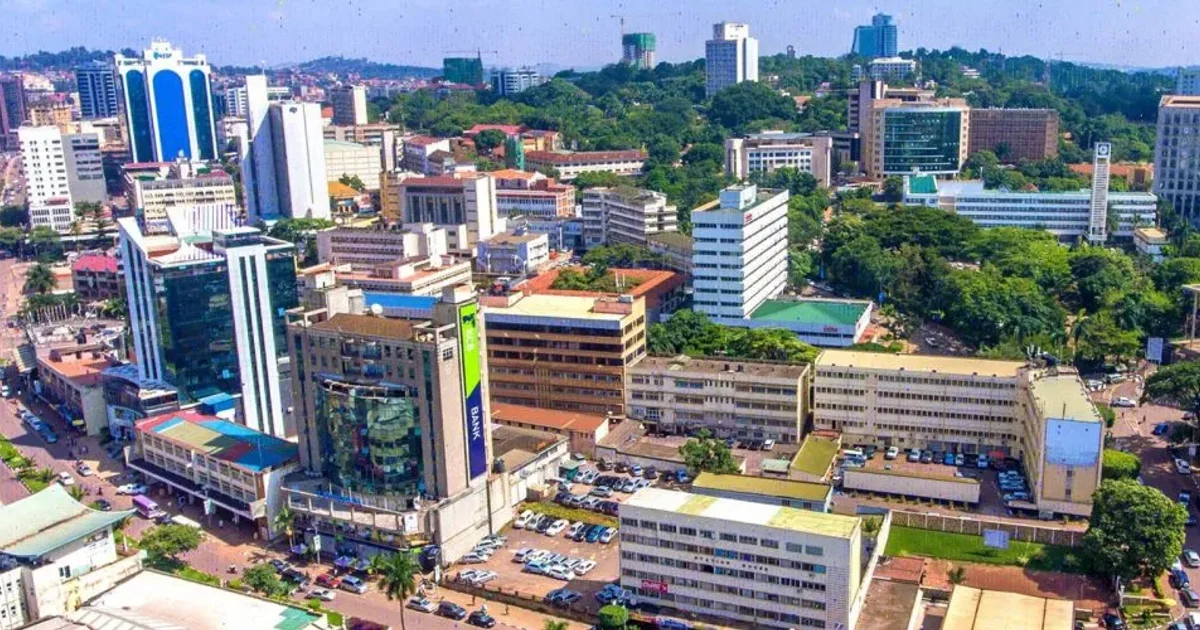
Why should a major Ugandan building look as though it could have been constructed anywhere in the world?
Consider Windhoek, Namibia.
During my travels there, I saw the use of locally sourced stone as part of the built environment. The message is simple: when visitors arrive, let them encounter Namibia.
That principle deserves serious consideration in Uganda.
Not every building must be constructed entirely from local materials. Modern engineering, cost, durability and availability matter. But where suitable local materials exist, public policy and architectural practice should examine how they can be incorporated more deliberately.
PARLIAMENT SHOULD LOOK LIKE THE PEOPLE’S HOUSE
This is particularly relevant to public architecture.
Uganda’s Parliament should not merely be structurally functional. It should also communicate something about Uganda.
If the current parliamentary expansion permits the appropriate engineering and procurement standards, why should locally sourced Moroto marble, Kisoro volcanic stone or other Ugandan materials not form part of its architectural identity?
Imagine entering the national legislature and immediately encountering the geology, craftsmanship and cultural vocabulary of Uganda.
The building itself would become a national statement.
The principle could extend to airports, museums, ministries, hospitals, universities and major public institutions.
Public architecture should tell the story of the public.
JINJA ONCE UNDERSTOOD THE ASSIGNMENT
Uganda does not have to invent everything from scratch.
Jinja still contains reminders of an architectural language that once gave parts of the city a distinct character.
Around Magwa Crescent, Nizam Road and Muvule Lane, one encounters buildings with arcades, balconies, shaded verandas and other architectural elements reflecting the city’s historical influences.
Dar es Salaam offers another lesson.
In areas such as Kariakoo, Swahili, Arab and Indian Ocean influences remain visible in the built environment.
These cities demonstrate that history can be retained without preventing development.
The challenge is preservation and adaptation.
KAMPALA’S PROBLEM IS NOT THAT IT IS MODERN
Kampala does not need to become an open-air museum.
The problem is that rapid development can produce buildings with little relationship to one another or to their surroundings.
A city can be modern without becoming anonymous.
Look at some of Kampala’s new developments: glass boxes, concrete boxes, metal boxes — often functional, sometimes expensive, but frequently lacking a recognisable Ugandan architectural signature.
A wealthy developer can spend millions constructing an impressive building that could just as easily stand in Nairobi, Dubai, Johannesburg or another global city.
That is a missed opportunity.
We should be building wealth with identity.
THE ROAD NETWORK MUST ALSO BECOME PART OF THE CITY’S DESIGN
Architecture does not exist in isolation.
Roads, public spaces, landscaping, pedestrian areas and building setbacks determine how a city feels.
Rome’s historic road patterns and ring roads demonstrate how circulation can become part of urban identity.
Kampala needs thoughtful integration of ring roads and radial connections, not simply endless road widening.
Urban planning should consider movement, density, drainage, pedestrian access, public transport, green space and architectural continuity as one system.
A beautiful building surrounded by chaotic urban planning cannot create a beautiful city.
THE DEVELOPERS SHOULD SELL STORIES, NOT JUST FLOOR PLANS
There is also an economic opportunity here.
A developer does not have to sell only:
“Three bedrooms, self-contained, tiled floor and parking.”
Why not sell a concept?
Ankole Long-Horn Residence.
A modern home whose roofline takes inspiration from the long-horn.
Kisoro Volcanic House.
A contemporary residence incorporating volcanic stone.
Buganda Courtyard House.
A modern interpretation of the traditional inward-looking compound.
Busoga Veranda House.
A contemporary home inspired by shaded verandas and regional architecture.
That is not merely aesthetics.
It is branding.
Heritage can become an economic asset when architects and developers turn it into distinctive, desirable products.
KCCA AND GOVERNMENT CAN SET THE STANDARD
Uganda could begin with carefully selected heritage and signature zones.
Jinja’s historic streets could receive stronger protection.
Kampala could identify major corridors where architectural quality, landscaping, signage, pedestrian infrastructure and building design receive more coordinated attention.
Imagine Kampala Road, Jinja Road and Entebbe Road developing recognisable architectural standards.
A building approval process should, of course, remain grounded in structural safety, accessibility, environmental performance and planning law. But urban design quality can also be considered.
A city is more than the sum of buildings that happen to stand on its land.
THE ARCHITECTS HAVE THE HARDEST QUESTION TO ANSWER
The question is not:
“How do we make Uganda look like Rome?”
Nor:
“How do we make Kampala look like Dubai?”
It is:
“What does a Ugandan city look like when it becomes fully modern without becoming culturally anonymous?”
That is the conversation our architects, engineers, planners, developers, historians and policymakers should be having.
Perhaps the answer will involve the Ankole long-horn.
Perhaps Buganda courtyards.
Perhaps Acholi forms.
Perhaps materials from Moroto, Kisoro, Kasese and elsewhere.
Perhaps something entirely new that future generations will recognise as unmistakably Ugandan.
But we must begin the conversation.
THE JOURNEY OF TWO GENERATIONS
My Jjajja Muguluma travelled for an entire year in 1927 to see the world.
I have followed, in my own way, travelling through more than 56 countries.
He travelled when seeing the world required extraordinary determination.
I travel in an age when crossing continents can take hours.
But we travelled for the same fundamental reason:
to learn.
I did not come back believing Uganda should become Italy, China, Namibia or the United Arab Emirates.
I came back believing that every successful civilisation eventually answers the question of identity.
Who are we?
What do our buildings say?
What do our streets say?
What do our public institutions say?
What do we leave behind for our children?
Uganda already possesses the raw materials — physical, cultural and historical — from which a distinctive architectural identity could emerge.
Moroto gives us marble.
Kisoro gives us volcanic stone.
Kasese gives us limestone.
Our communities give us forms, patterns, courtyards, roofs, craft traditions and stories.
The long-horn gives us an image of strength and movement.
Now we need the imagination to bring these elements into contemporary architecture.
Because a country can wear expensive clothes and still have no face.
My Jjajja went into the world to bring back knowledge. I have tried to do the same.
And the lesson I bring home is simple:
Let Uganda modernise without disappearing.
Let our cities become more efficient without becoming anonymous.
Let our public buildings carry our history.
Let our materials enter our architecture.
Let our roads and boulevards become part of our identity.
And, above all, let the next generation look at a Ugandan building and say without being told:
“That is ours.”
That, perhaps, is the real journey the Oracles of Kifuuta are asking Uganda to begin.