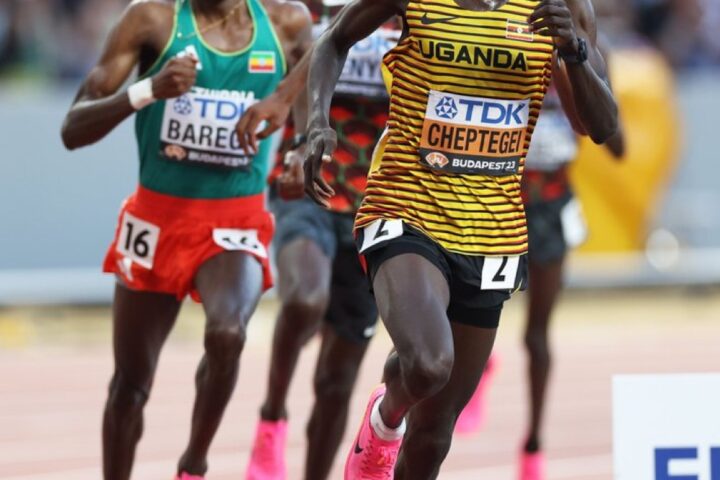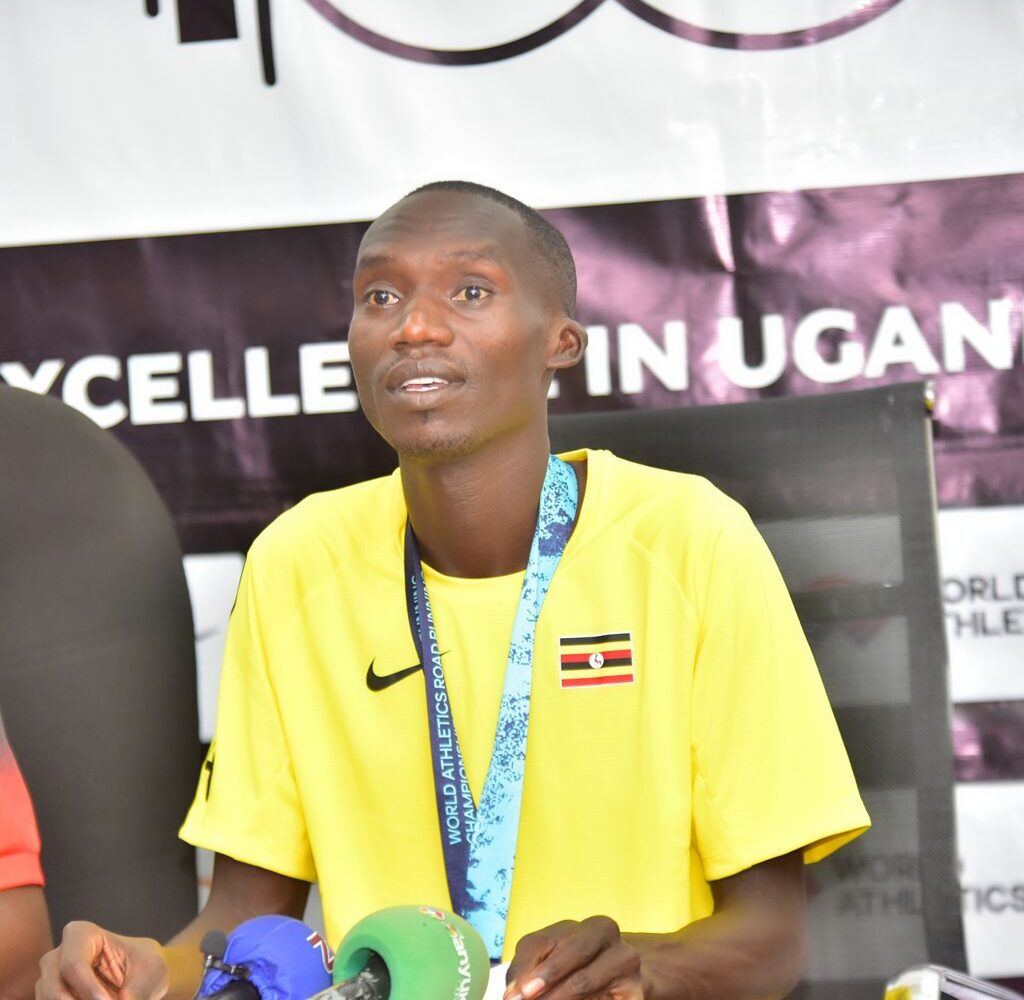
Uganda’s fourth-place finish at the 2026 World Road Running Championships in Copenhagen has reignited calls for a fundamental review of the country’s investment in athletics, with team captain Joshua Kiprui Cheptegei questioning the adequacy of funding and preparation structures.
Cheptegei, who secured Uganda’s only individual medal with bronze in the half marathon, said the team’s performance could have been stronger had athletes been given a sustained residential training camp before travelling to Denmark.
The Ugandan captain said the absence of collective preparation represented a significant departure from previous international campaigns, when athletes spent between six weeks and two months together sharpening their fitness and team cohesion.
“As a sport, we’re not where we were sometime back, but we don’t want to go back there. With this team, we didn’t have any residential camp like we used to,” Cheptegei said.
He called on the government and the National Council of Sports (NCS) to reconsider the level of financial support extended to athletics, arguing that the sport continues to deliver strong international results despite operating with limited resources.
“As a country, athletics is really underfunded and it’s performing well, so I see this as a hiccup when it comes to our results.
It’s an appeal to the government and NCS to at least increase the funding to this federation,” he added.
Uganda travelled to Copenhagen with a 16-athlete delegation, comprising eight men and eight women, and ultimately finished fourth among the 21 countries ranked at the championships.
Cheptegei led the individual charge, clocking a personal best of 58:28 to claim bronze in the half marathon. Feb Chelogoi finished 43rd in the same race in 1:02:08, while Kenneth Kiprop delivered another notable performance with fifth place in the 5km in 13:04.
However, team manager Apollo Musherure believes Uganda’s overall return could have been greater had the athletes prepared collectively.
Musherure congratulated the team on its fourth-place finish but noted that most of the Ugandan athletes effectively competed as individuals rather than as a cohesive unit.
“We would perform more than that if we trained together as a team in a residential camp.
We would run well as a team, but when you analyse, the runners performed as individuals, not as a team like our neighbours, Kenya, did,” .
He urged the athletics federation to restore residential camps as a central component of preparations for major international championships.
“Next time, we need a residential camp if we are to add to our performance,” he said.
The Ugandan delegation returned home on Monday night before an official welcome at the Uganda Athletics offices in Kampala on Tuesday.
Musherure handed the national flag back to Uganda Athletics Federation president Dominic Otucet after presenting an account of the team’s participation in Copenhagen.
Uganda’s Copenhagen delegation
Men: Joshua Kiprui Cheptegei (Captain), Feb Chelogoi, Mande Bushendich, Martin Kiprotich, Kenneth Kiprop, Alex Kiplangat, Silas Chemutai and Hosea Kiprop.
Women: Esther Chebet, Rebecca Chelangat, Annet Chemengich Chelangat, Esther Yeko Chekwemoi, Charity Martha Chemutai, Patience Cherop and Felister Chekwemoi.