By Joseph Mbazzi Muguluma
Why should a man’s home be reduced to ashes while he is in police custody, yet an entire nation remains seemingly unmoved? What has happened to our collective conscience?
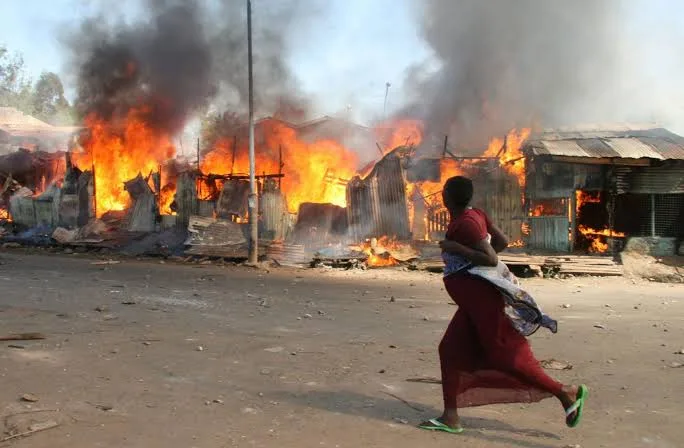
The reported burning of Muzei Magala’s home in Luwero should provoke serious national reflection. This is not merely about one man, one family or one destroyed property. It raises fundamental questions about security, justice, accountability and the safety of ordinary citizens.
Luwero is no ordinary district. It is the historical cradle of the rebellion that ushered in Uganda’s current political order.
Its people sacrificed lives, livelihoods and homes in the struggle for liberation. That such an incident can occur there without sustained public scrutiny is deeply troubling.
I have openly admired Muzei Magala’s intellectual capacity. He is one of the finest uneducated minds I have encountered. His formal academic qualifications may be limited, but his understanding of history, society, grassroots politics and power is remarkable. You can detain a man, but you cannot imprison his intellect. You can burn his house, but you cannot set fire to wisdom.
The most disturbing question, however, is what might have happened had children, women or other family members been inside the house. Would we still be discussing a property incident, or mourning innocent lives?
THE MIRROR DOES NOT LIE
The burning of Magala’s home should serve as a warning about the dangers of normalising violence and public indifference. A society that remains silent when another person’s security is threatened eventually discovers that its own safety is equally fragile.
Security must be measured not merely by the number of weapons deployed, but by the confidence citizens have that the state can protect them, including the families of people in detention.
Our leaders, particularly those whose political history is deeply rooted in Luwero, must recognise the symbolic weight of this incident. The district deserves protection, dignity and accountability, not silence.
Security agencies should establish the circumstances surrounding the fire, identify those responsible and ensure that justice is served. Speculation and political accusations cannot replace an independent, credible investigation.
Kenya’s 2007–2008 post-election violence and South Africa’s painful apartheid history remind us that unresolved grievances and institutional failures can deepen national divisions.
The gods of Kifuuta, Kyotera, Buddu, are placing a mirror before us. Let us have the courage to examine what it reveals.
I choose dialogue over hostility, accountability over silence and justice over vengeance.
A house can be rebuilt with bricks and iron sheets. But when public trust burns, rebuilding a nation becomes a much harder undertaking.
As the Kifuuta Oracle, I have seen it all.