By Joseph Mbazzi Muguluma
There was a time when football in Uganda was not merely a game of 22 men chasing a ball. It was theatre. It was art. It was an exhibition of extraordinary talent, where gifted men turned ordinary football pitches into stages and left thousands of spectators wondering whether what they had witnessed was football or magic.
There was a generation of footballers whose names were enough to send fear through an opposing dressing room.
They did not need elaborate introductions, expensive boots or fashionable hairstyles. They had talent, character, intelligence and an almost supernatural understanding of the game.
Giliita, also known as Minora, was one of those rare gifts.
Giliita was not simply a footballer. He was a magician with a ball seemingly tied to his feet.
He could dribble past a defender, turn around, dribble past the same man again and leave him wondering which direction the game was heading.
Like Lionel Messi today, he had a preferred side. Once he cut inside onto that favoured foot, defenders knew they were in serious trouble. He was everywhere on the pitch, prompting spectators to ask: “Which position is Minora playing today?”
The answer was simple: all of them.
He could defend, dictate play in midfield and lead the attack. He was practically an entire team compressed into one footballer.
His brilliance became so overwhelming that, according to the stories of that generation, football officials once resorted to an extraordinary intervention. Having scored twice and dismantled the opposition’s defence, Giliita was reportedly withdrawn from the match and locked inside the dressing room to give the opponents some breathing space.
But the spectators would have none of it.
The stadium erupted with chants of “Bring back Giliita! Bring back Giliita!”
Eventually, the officials relented. The dressing-room door was opened, and the magician returned to the pitch. He picked up where he had left off, tormented the same defenders and scored again.
That was Giliita. When football could not contain his talent, even the rules seemed to struggle.
His influence is remembered in stories about the introduction of football licensing in Uganda, a testament to just how extraordinary his reputation became.
Then there was Mike Mukasa, the goalkeeper.
In a five-penalty shootout, Mukasa reportedly saved three. Three out of five!
Today, the world celebrates goalkeepers such as Emiliano Martínez, Thibaut Courtois and Gianluigi Donnarumma for producing decisive penalty saves. Mukasa was doing something extraordinary in his own time.
In those days, taking a penalty against Uganda was not necessarily an opportunity to score. It was a gamble.
Saddick Wassa was another formidable name. He was a defensive wall, the kind of player whose presence alone could make opposing strikers reconsider their ambitions. He represented the toughness, discipline and authority that defined the defenders of that generation.
Then came Mukasa Gaso.
His nickname was inspired by the Gaso bus of that era, remembered for its remarkable speed. It was a fitting description of a footballer who seemed to operate on a different speed limit.
Playing on the right wing, number 11, Gaso could collect the ball and accelerate into spaces that defenders had barely imagined. Once he took off, catching him became an exercise in frustration.
Ssekatawa occupied the number nine position, leading the attack as the traditional centre-forward and finisher. But when Gaso found room to accelerate, even the centre-forward could become a spectator.
There was also Sulaiman Kato, the specialist from corner kicks. Give him a corner, and the opposition goalkeeper had every reason to become uncomfortable. His deliveries possessed the accuracy and movement that made set pieces an art form.
Moses Ndawula was equally dangerous from free-kick situations. From distances approaching 35 yards, he could unleash efforts that left goalkeepers with little more than the sound of the net to console them.
His technique brought to mind Roberto Carlos’ extraordinary free-kick against France in 1997, the famous bending effort that defied conventional expectations of ball movement.
Ndawula was producing his own moments of brilliance on Ugandan pitches, before equally enthusiastic crowds.
But then, one must talk about Philip Omondi.
Omondi’s relationship with a football was difficult to explain through ordinary football language. His control, balance and manipulation of the ball were exceptional. The ball appeared to understand his instructions.
One unforgettable account involves KCC Kasasiro Boys’ encounter with Arab Contractors, who had travelled to Uganda for a match that attracted enormous public interest.
Omondi received the ball and embarked on a dazzling individual run. He beat one opponent, then another, and another, before rounding the goalkeeper and finding the back of the net.
But he was not finished.
In the same remarkable sequence, he lifted the ball into the air, allowed it to drop, went past the goalkeeper once more and scored again.
The stadium erupted.
Even spectators from the visiting Arab contingent reportedly rose to their feet, shouting, “Allah Akbar! Allah Akbar! Allah Akbar!”
They had come to Uganda to watch football, but Omondi’s performance had given them something extraordinary to remember.
That encounter is also remembered as a defining moment in his journey towards professional football. Such was his ability that his talent could attract admiration beyond national borders.
Greatness, after all, does not require translation.
And what would this conversation be without Magid Musisi, famously known as Tyson?
Musisi was a striker with extraordinary movement, balance and finishing ability. He could turn defenders inside out, create shooting opportunities from seemingly impossible angles and score goals that appeared to challenge the laws of geometry.
He became one of Uganda’s most celebrated football exports, with his move to professional football in Europe marking an important chapter in the country’s football history.
Paul Hasule, affectionately known as V8, brought a different dimension to the game.
He was an intelligent, educated and tactically astute footballer. Operating primarily as a number four, Hasule understood the art of defending while possessing the athleticism and confidence to join attacks.
His overlapping runs resembled a powerful Toyota Land Cruiser V8 climbing a steep hill: composed, forceful and difficult to stop.
He was a defender who could attack like a striker.
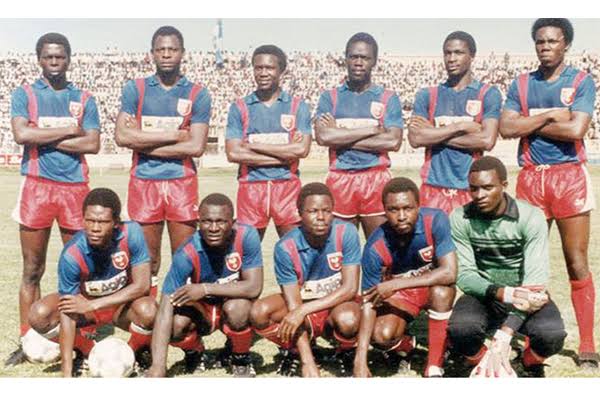
And then there was the wider army of immortals: Ronald Vubya, Steven Bogere, Mukatabala, Roger Nsubuga, Jackson Mayanja, Jimmy Kirunda, Dennis Obua, Timothy Ayeko, Polly Ouma, John Ross Latigo, Andrew Fimbo Mukasa, Mathew Lucha, Mike Kiganda, Sam Simbwa, Sanday Mokili and Godfrey Katerega.
These were not ordinary footballers. They were custodians of an era when individual brilliance and collective excellence could coexist.
The Uganda Cranes carried a reputation that demanded respect. Representing the national team meant something profound. It was about national pride, footballing identity and the responsibility of wearing the country’s colours.
At club level, SC Villa became a continental force.
The Jogoos reached successive African Club Championship finals, an extraordinary achievement that remains one of the greatest accomplishments in Ugandan club football.
Their continental journey was not built on easy victories against unfamiliar opponents. Villa confronted established African sides, including Nigeria’s Iwuanyanwu Nationale and Shooting Stars of Ibadan.
These were formidable opponents with history, resources and continental ambitions.
Villa overcame them on the road to the finals, demonstrating that Ugandan football could compete with the best on the continent.
Although the ultimate continental prize remained elusive, reaching back-to-back finals was an achievement that demanded recognition. It was evidence of a football culture capable of producing teams with continental ambition and the quality to match it.
Behind these footballing achievements stood administrators and managers whose contributions must never be erased.
Patrick Kawooya, Bidandi Ssali, Adipondo, Faisal Damulira, Jack Ibare, Abdallahiman Hippo, Bbale Mugera, Buyondo, Ben Misagga and Franco Mugabe were among the names associated with the management and development of football during that period.
They operated in a different environment, but their contribution to the game’s growth deserves acknowledgement. Football was not simply about what happened between the touchlines. It was also about the people who organised, financed, managed and believed in it.
THE GENERATION THAT LOST ITS WAY
And now, look at us.
What happened to Ugandan football?
Where did the production line of technically gifted players disappear to? Where did the culture of nurturing young footballers, teaching them the fundamentals and developing their tactical understanding go?
Today, we are confronted with the uncomfortable reality of players who appear technically underdeveloped despite spending years in organised football.
Some reach university football without having mastered the elementary requirements of the game. The problem is not that they are university students; it is that our development structures have failed to provide them with the necessary foundations.
We have struggled to manufacture and nurture footballers to the standards expected of a serious footballing nation.
Our national team, once a source of immense collective pride, is increasingly caught in debates about money, personal interests, selection politics and administrative manoeuvring.
Professional football requires financial reward. Players deserve to earn from their talent, and nobody should begrudge them that opportunity. But money cannot become a substitute for commitment, discipline, technical excellence and patriotism.
The problem is not that modern footballers earn money. The problem is when financial interests become more important than the game itself.
We must ask difficult questions about grassroots development, coaching standards, school football, talent identification, club structures and the pathways available to young players.
We cannot continue celebrating the past while neglecting the foundations upon which the future must be built.
Football has evolved. Training methods have improved, sports science has transformed performance, and the modern game demands greater physical, tactical and technical sophistication.
But evolution should not mean abandoning the fundamentals.
We need players who can control a ball under pressure, beat an opponent, deliver an accurate pass, read the game and take responsibility when the team needs them.
We need another Giliita, another Philip Omondi, another Magid Musisi, another Paul Hasule.
Not necessarily replicas of the old generation, but footballers with the same hunger, imagination, intelligence and commitment to excellence.
WE SAW GODS WALK ON EARTH IN JERSEYS
So, when we old ones speak about the football of yesterday, do not dismiss us as men trapped in nostalgia.
We are speaking about an era we witnessed. We remember the players, the stadiums, the rivalries, the celebrations and the extraordinary moments that made Ugandan football special.
We remember when a footballer could make an entire stadium rise to its feet simply by receiving the ball.
We remember when SC Villa could travel across Africa and return with the reputation of a continental giant.
Those memories are not an argument against modern football. They are a reminder of what Uganda has previously been capable of producing.
Tulabye, Ayi Katonda etuyambe. Bulikimu kyasoba.
We have seen it all. We have watched footballers become legends, ordinary pitches become theatres and football matches become stories that survive generations.
The gods of Kifuuta Kyotera Buddu came to give us football. And today, the Oracle of Kifuuta Katooke, Kyotera Buddu, drives through the corridors of memory, bringing back the men who made the beautiful game beautiful.
I have seen it all.
And I can tell you without hesitation: there was a time when football was football.