By Joseph Mbazzi Muguluma (Immanuel Ben Misagga)
A Russian friend of mine, Karolinska Mariah, once told me something that has stayed with me: “In Russia, they say a man begins retiring five years before he leaves office. In Uganda, we begin retiring the day they take away the car keys.”
There is uncomfortable truth in that observation.
For many Ugandans approaching 60, retirement is treated as an event rather than a transition. The farewell party is planned, speeches are made, a watch or plaque is presented, the official vehicle disappears — and only then does the former office-holder begin asking the most important question: What next?
But the real retirement should have started years earlier — in the mind, in the family, in the finances and in the daily routine.
My late Taata, Joseph Bbembe Jjajawabana Wakulanume, understood this unusually well.
He retired in 1989. He gathered us and simply announced: “I am going back to Our Home — Naziba, Sseguku.”
Naziba was not merely a place to him. It was home and eventually our burial ground.
He was Mukulu — a man of style, discipline and routine. He never wore the same shoes two days in succession. His bedsheets were always white. His Peugeot 504 was washed several times a day. He wore a Rado watch and enjoyed his carefully chosen drink.
But beneath that elegance was something more important: he had prepared himself for life after office.
He sold the Peugeot. He disposed of scattered pieces of land in Wakisi, Naminya, Kangulumira, Nakibizi and Jinja, and distributed the proceeds among us while he was still alive.
Buli omu yamuwa mulamu.
Then we bought him a Datsun pick-up.
He reduced his world to manageable things: a few trees — avocado, Nkomamawanga and Kitafeli — some chickens, a few pigs and a disciplined daily routine.
Breakfast was simple. Lunch came at 1pm. He rested in the afternoon. At 4pm, he woke, dressed properly and went out to meet people.
He lived another 21 years in retirement, reaching 86.
That is the lesson worth preserving.
The question for today’s 58-, 59- and 60-year-old is therefore not, “How many years do I have left in office?”
It is:
“How do I want to live for the 20 or 25 years after office?”
Because the period from 60 to 85 can be longer than the period you spent occupying your final senior appointment.
Retirement must begin in the mind
The body does not wait for the retirement letter.
From the late 50s onwards, many people experience gradual changes in strength, vision, hearing, sleep, digestion, balance and recovery.
These are not signs that life is ending. They are reminders that the body now requires a different operating manual.
Muscle mass and strength can decline with age, particularly without regular physical activity.
Vision may change as the eye’s lens becomes less flexible.
Hearing loss can make conversations and television increasingly difficult. Sleep patterns may become less predictable.
For women, menopause brings major hormonal changes. For men, urinary symptoms and other age-related changes may become more common.
None of these changes should simply be dismissed as “old age.” Persistent symptoms deserve proper medical attention.
And there is one area people often neglect: mobility.
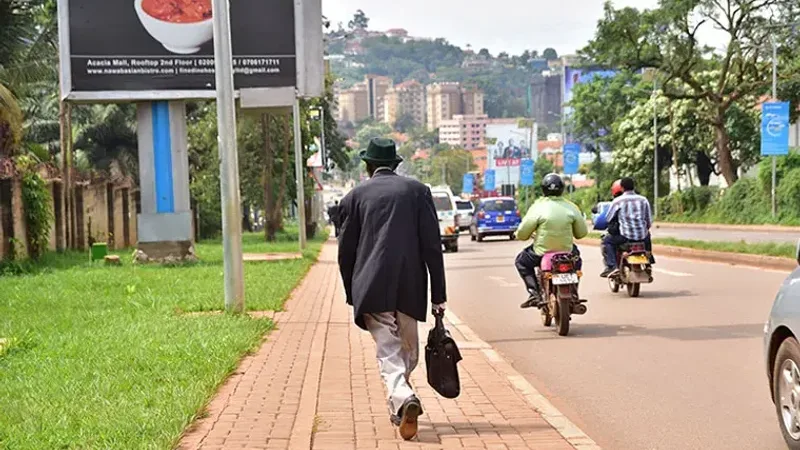
My Taata did not need an elaborate fitness programme. He walked.
Every afternoon at around 4pm, he moved.
The lesson is simple: retirement should not mean becoming physically stationary.
Then there is the question of dignity
Many people spend decades being important because an office makes them important.
The telephone rings because of the position.
The driver waits because of the position.
People knock because of the position.
Then one morning, the keys are handed over.
The calls reduce.
The office disappears.
And suddenly, the person has to discover who he or she is without the title.
That is why preparation must begin before retirement.
Do not wait for the farewell ceremony to discover that your entire identity was attached to your office.
Five lessons from Naziba
1. Call the family parliament before retirement
Bring the children together while everyone is still listening.
If you have scattered land in seven districts, ask whether you genuinely need seven distant properties.
Inheritance should not become the first occasion on which your children sit together.
Where appropriate, organise your assets, document ownership and communicate your intentions while you are alive and capable of explaining them.
My Taata did not wait for his children to fight over what he had accumulated.
He reorganised his affairs while he was still there to guide us.
2. Downsize the machine before the machine consumes you
The official car is part of the job.
Retirement changes the economics.
A Prado, V8, driver, fuel, servicing and insurance may have been affordable when the institution was carrying the cost.
They may become a very different burden when the salary and allowances disappear.
My Taata sold the Peugeot 504 and moved to a simpler Datsun pick-up.
The principle is bigger than the vehicle:
Own things that serve your retirement, rather than possessions that demand that you continue working to maintain them.
3. Choose a manageable retirement project
You do not have to become a commercial farmer at 60.
Three useful trees may be better than an ambitious farm you cannot supervise.
A few chickens.
A few pigs.
A small garden.
A modest rental project.
Something you can see, manage and enjoy.
Retirement needs purpose — not necessarily another empire.
4. Build a daily routine before the office builds one for you
This may have been one of my Taata’s greatest secrets.
He had structure.
He woke, bathed, ate, rested, dressed and went out.
At 4pm, he changed from the rhythm of the house into the rhythm of society.
He looked presentable.
He met people.
He talked.
He remained connected.
That matters.
Retirement can become isolating when every day becomes identical and there is nowhere to go, nobody to meet and nothing meaningful to do.
Your routine should include physical activity, social contact, family, hobbies, rest and responsibilities.
And yes — take care of your mouth, teeth, skin, clothes and general hygiene.
Growing older is not an excuse to abandon presentation.
5. Keep faith, but keep living
Church can give retirement meaning, community and spiritual grounding.
But retirement should not become an endless waiting room.
Go to church.
Pray.
Thank God.
Then come home and live.
Walk.
Visit friends.
Look after your garden.
Check on the animals.
Talk to your grandchildren.
Attend community activities.
Find something that makes tomorrow worth waking up for.
Your 4pm may be more important than your last official day
This is perhaps the biggest lesson from Naziba.
The danger of retirement is not simply loss of income.
It is loss of structure, relevance and human connection.
A person who has spent 35 years being summoned to meetings may struggle when nobody summons him anywhere.
That is why retirement planning cannot be reduced to pension calculations.
You need a financial plan.
A health plan.
A family plan.
A social plan.
A purpose.
And a daily routine.
Your office may tell you that you are still powerful.
Your body may already be telling you to prepare for a different chapter.
Listen to both — but prepare for the second.
If you are 58, 59 or 60, do not wait until the keys are collected.
Start retiring before you retire.
Organise the family.
Simplify the assets.
Review the finances.
Protect your health.
Keep moving.
Build friendships outside the office.
Find a place you can call home.
And create your own 4pm.
My Taata found his in Naziba.
He had his Datsun.
His three trees.
His white bedsheets.
His routine.
His friends.
His family.
And, most importantly, he knew where Our Home was.
That may be the real meaning of retirement: not losing your life when you lose your office, but having prepared another life to enter when the office is gone.